
Youth Soccer Guide
Is Soccer Good for Girls? What Parents Should Know
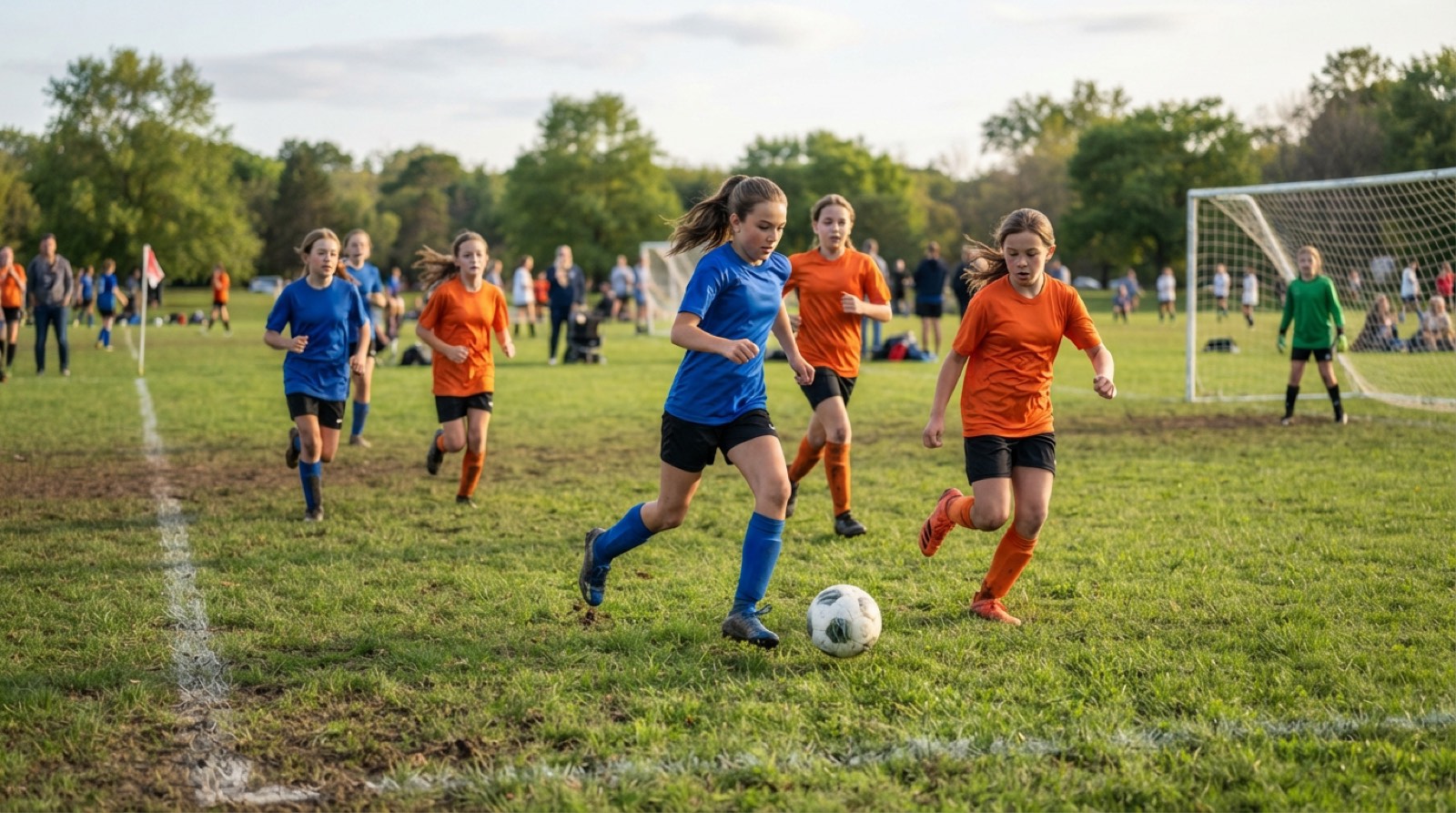
Parents ask me this in different ways: “Is soccer good for girls?” “Will my daughter be safe?” “Will she be treated seriously?” “Is this still a good sport if she is shy, small, or brand new?”
Yes. Soccer can be very good for girls when the coaching is patient, the standards are high, and the environment lets them lead. In Temecula, Murrieta, Menifee, and Lake Elsinore, I have watched girls use soccer to find their voice long before they had the words for it.
Key takeaways
- Soccer is one of the biggest high-school sports for girls in the United States.
- Girls soccer has passed girls basketball in high-school participation.
- The benefits include fitness, confidence, leadership, friendships, and resilience.
- Injury risk is real, especially concussion and lower-body injuries, so coaching matters.
- The right team is the one where your daughter is challenged and still wants to return.
Is soccer good for girls?
Yes. Soccer is good for girls because it builds fitness, confidence, decision-making, and leadership in a team setting. It is also one of the largest girls high-school sports in the country. The key is the environment: girls need coaches who teach, listen, protect safety, and expect them to be strong.
The National Federation of State High School Associations reported 393,048 girls playing high-school soccer in 2024-25, compared with 356,240 in girls basketball. That matters. Girls soccer is not a side option. It is a major pathway for girls who want team sport, speed, skill, and room to grow.
If you are deciding whether soccer fits your child at all, start with the bigger parent guide: Is Soccer Good for Kids?. This post focuses on what changes when the player is your daughter.
Why soccer fits many girls so well
Soccer gives girls constant decisions without constant adult control. They learn to scan, pass, defend, recover, speak, and try again. A good practice gives a girl hundreds of chances to act, not just wait. That repetition is where confidence starts to feel normal.
The CDC recommends children ages 6-17 get at least 60 minutes of moderate-to-vigorous physical activity every day. Soccer helps because it is not one long sprint. It is a mix of running, stopping, changing direction, balancing, and competing with teammates. Girls who do not like repetitive workouts often love soccer because the movement has a purpose.
The social piece matters too. Girls are often asked to be careful, polite, and agreeable. On a soccer field, they practice something else: calling for the ball, taking space, making a tackle, and recovering from mistakes in public. I have seen that change carry into school and family life.
What the participation numbers show
Girls soccer has real scale. It is not just popular in one town or one club. In 2024-25, NFHS listed girls soccer as the third-largest girls high-school sport, behind outdoor track and field and volleyball, with basketball in the fourth spot. That gives girls a clear route from youth soccer to school teams.
| Girls high-school sport | 2024-25 participants |
|---|---|
| Outdoor track and field | 513,808 |
| Volleyball | 492,799 |
| Soccer | 393,048 |
| Basketball | 356,240 |
Source: NFHS 2024-25 High School Athletics Participation Survey release.
I would not choose a sport only because it is popular. But participation does tell you something useful: your daughter is not entering a dead-end activity. There are girls teams, school opportunities, role models, and a visible pathway. If she later wants a stronger soccer environment, competitive soccer can be a next step when she is ready.
How soccer builds leadership
Leadership in soccer starts small. A girl asks for the ball. She reminds a teammate where to stand. She takes a penalty after missing one last week. She learns that mistakes are feedback, not identity. Those moments build the kind of leadership parents actually want.
The Women’s Sports Foundation 2024 Play to Lead report found that 49% of women credit skills learned through sport for their leadership development. The same report found that 71% of women with formal leadership roles said sport helped them get there, and 73% of women named teamwork as a top skill learned through sport.
Those numbers match what I see. The player who is quiet in August may be organizing the back line by spring. The girl who hates making mistakes may learn to demand the ball again. That does not happen from speeches. It happens from repeated chances to be brave in a safe place.
What about safety for girls?
Soccer is a contact sport, so safety deserves a straight answer. Girls can face ankle injuries, knee injuries, and concussion risk. That does not mean soccer is a bad choice. It means parents should look closely at coaching, warm-ups, heading rules, field conditions, and how the club handles injuries.
The American Academy of Pediatrics says youth soccer injuries are commonly lower-extremity injuries such as sprains and contusions, and many are largely preventable. The CDC HEADS UP program is also clear that suspected concussions should be taken seriously and managed before an athlete returns.
For heading, U.S. Soccer’s youth guidance says there is no heading in games for players age 10 and under and heading is limited through age 13, as summarized in the U.S. Soccer policy discussion published by NIH. Parents should ask how a club teaches this. A vague answer is a warning sign.
Girls-only or coed: which is better?
Neither format is automatically better. Girls-only teams can give players more voice and belonging. Coed training can be useful when the coach manages it well and the level fits. The right choice is the one where your daughter gets touches, feels respected, and leaves wanting more.
| Format | Best fit | Watch for |
|---|---|---|
| Girls-only team | Confidence, friendships, school pathway | Level may vary by local player pool |
| Coed training | Extra challenge, mixed pace, skill growth | Coach must manage contact and voice |
| Private or small-group training | Specific skill needs | Should support, not replace, team joy |
Some girls want the fastest, toughest group. Others need a place where they will speak up first. Both are valid. If your daughter is new, a free evaluation can help place her in the right environment without guessing.
How parents can support their daughters
Your daughter needs support that separates love from performance. Ask what she learned before asking whether she won. Praise courage, effort, and good decisions. If she is upset, give her space before giving advice. Girls should not feel they have to be perfect to be worth watching.
Aspen Institute Project Play reports that the average child quits sports by age 11, and 36% said they quit because the sport stopped being fun. That is the parent job: help protect the joy while still respecting effort and commitment.
Sideline pressure can be especially loud for girls who already carry pressure from school and friends. If you need a reset, read Supporting Your Young Athlete Without Being That Sideline Parent. The best soccer parents are steady, not silent, and encouraging, not controlling.
Finding soccer for girls in Southwest Riverside County
For families in Temecula, Murrieta, Menifee, Lake Elsinore, Wildomar, and French Valley, look for a club that treats girls development as a real pathway. Ask about coaching licenses, safety rules, team placement, playing time philosophy, and how the club helps new players catch up.
If your daughter is just starting, your child’s first soccer practice will help you prepare. If she already wants extra touches, training can sharpen skills without rushing the competitive path. The goal is simple: give her a place where strong feels normal.
Frequently asked questions
Is soccer good for girls?
Yes. Soccer gives girls strong aerobic activity, teamwork, confidence, and a place to lead. National data show girls soccer is one of the largest high-school sports for girls. The best programs keep the game fun, teach skill, and protect players with age-aware coaching.
Is soccer safe for girls?
Soccer has real injury risk, especially ankle and knee injuries and concussion risk. The American Academy of Pediatrics says many soccer injuries are largely preventable. Look for coaches who teach warm-ups, enforce fair play, manage heading by age, and respond seriously to any head injury.
What age should girls start soccer?
Many girls can start with playful soccer activities before formal teams. The American Academy of Pediatrics says most children are ready for organized team sports around age 6. Before that, keep it simple: running, dribbling, stopping, turning, and enjoying the ball.
Can soccer help girls become leaders?
Yes. Women's Sports Foundation research found that nearly half of women credit sport with leadership development, and women leaders often point back to sport. Soccer gives girls practice speaking up, solving problems, handling pressure, and working with teammates toward a shared goal.
Should my daughter play girls-only or coed soccer?
Both can work. The right choice depends on confidence, age, skill level, and the local coach. Some girls thrive in coed settings; others open up faster on girls teams. Choose the environment where your daughter gets touches, feels respected, and wants to return.