
Youth Soccer Guide
Supporting Your Young Athlete Without Being That Sideline Parent
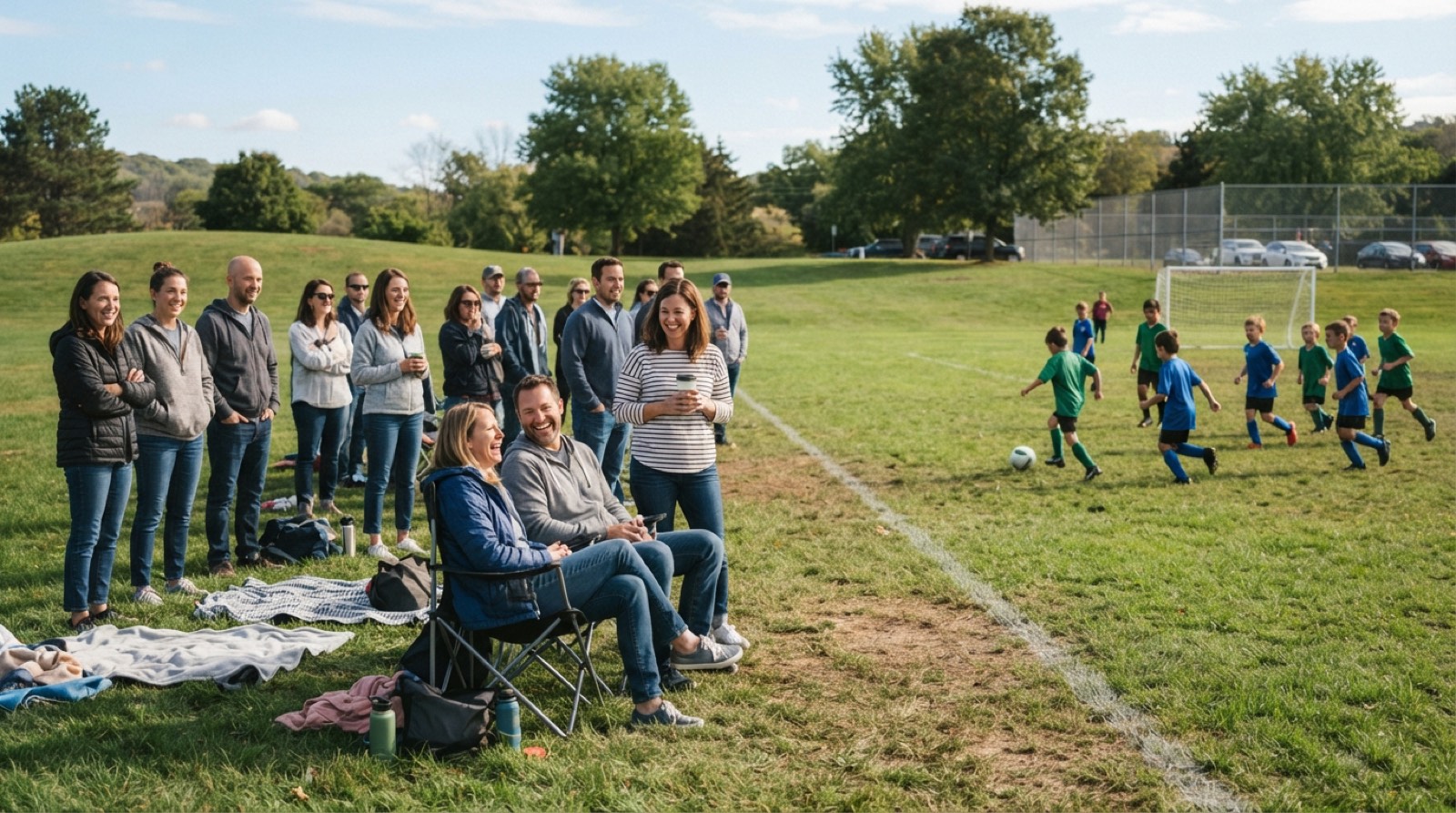
Every soccer field has one: the parent who means well but turns every touch into a command. “Pass!” “Shoot!” “Run!” “Why did you do that?” The child hears love mixed with panic, and the game gets smaller.
I say this as a coach and a parent ally, not as a judge. Most sideline problems come from care. You want your child to do well. But the way you support them can either build confidence or make soccer feel like another test.
Key takeaways
- Your child should hear the coach during play, not a second coach from the sideline.
- Cheer effort, courage, and teamwork more than goals.
- Save teaching for later, and keep the ride home calm.
- Referee and opponent behavior teaches your child what adults believe about respect.
- The goal is not a perfect game; it is a child who wants to keep playing.
What is good sideline parent behavior?
Good sideline parent behavior is supportive, calm, and brief. Cheer effort, good choices, teamwork, and bravery. Do not coach every play, argue with referees, or make mistakes feel bigger than they are. Your child needs one soccer voice during the game, and that voice should be the coach.
In my experience, kids are very good at reading parent faces. They see the dropped shoulders. They hear the sigh. They notice when the applause only comes after goals. Sideline behavior is not just words. It is the whole message your child receives while trying to perform in public.
If your child is new to the game, your child’s first soccer practice is the place to set this tone early. Start steady, and you will not have to undo as much later.
Why sideline behavior matters so much
Sideline behavior matters because children connect adult reactions with their own worth. If every mistake gets a correction, the child learns to avoid risk. If effort gets noticed, the child keeps trying. The same game can feel safe or stressful depending on the adults around it.
Aspen Institute Project Play found that the average child quits sports by age 11, after less than three years in a given sport. The same survey found that 36% of kids who quit said the sport stopped being fun, and children named coaches as the top source of pressure. Parents can either lower that pressure or add to it.
I have seen talented players tighten up because they are playing for the car ride home. I have also seen average players grow fast because their parents made mistakes feel normal. The second child usually lasts longer, learns more, and enjoys the game.
What to say during the game
During the game, say less than you think. Use short, positive phrases your child can absorb without looking over. “Good effort.” “Great recovery.” “Keep working.” “Nice idea.” That is enough. If the coach needs a tactical change, the coach will make it.
| Instead of yelling | Try saying |
|---|---|
| ”Shoot!" | "Good idea!" |
| "Pass the ball!" | "Keep working!" |
| "What are you doing?" | "Next play!" |
| "Run faster!" | "Stay with it!" |
| "Ref, come on!” | Nothing, or clap for effort |
The U.S. Soccer Learning Center builds coaching through a license pathway, from Grassroots to Pro. That matters because coaching is a skill. Let trained coaches handle the teaching moments during play. Parents can still be powerful, but the power is emotional support, not live instruction.
What not to say during the game
Avoid commands, criticism, referee comments, and comparisons. Even when you are right, the timing is wrong. A child cannot dribble, scan, listen to the coach, manage pressure, and process a parent’s instruction all at once. Too much input slows the player down.
The same goes for referee talk. Youth referees miss calls. So do professional referees. If your child sees you lose control over a missed throw-in, they learn that blame is normal. That lesson is worse than the call.
I am not asking parents to be silent. I am asking you to be useful. Cheer the team. Encourage effort. Clap when an opponent is hurt and gets up. Model the behavior you hope your child will show when the game gets hard.
What to say after the game
After the game, connect first and analyze later. The best first sentence is simple: “I loved watching you play.” Then stop. If your child wants to talk, ask what they enjoyed, what felt hard, and what they want to work on. Do not turn the parking lot into a film room.
This is especially important after losses. Kids often know they made mistakes. They do not need a full list while they are tired, hungry, and disappointed. Give them time. A better learning conversation might happen at dinner, the next day, or with the coach at training.
If your child is struggling with losing, use the same rule I use after hard practices: make room for the feeling before the lesson. Young athletes learn better when they are not defending themselves.
How to handle referees, coaches, and other parents
Handle adults with the same respect you want your child to show. If you have a real concern, bring it to the coach after emotions settle. If another parent is yelling, move away or tell the team manager. Do not turn the sideline into another contest.
Youth soccer needs referees and coaches to stay in the game. The Aspen Institute’s youth sports facts cite research showing that with trained coaches, only 5% of kids did not return the next season, compared with 26% with untrained coaches. Adults shape whether kids come back.
That does not mean coaches are above questions. Ask them. Just do it at the right time and in the right tone. A calm email after a day is better than a heated conversation as players walk off the field.
How to support a driven player
A driven player still needs a parent, not another performance manager. Help them prepare, sleep, eat, arrive on time, and recover from mistakes. Praise the habits they control. If every conversation is about goals, minutes, and wins, soccer can start to feel like a job.
The American Academy of Pediatrics advises delaying single-sport specialization until about age 15-16 and keeping young athletes balanced with rest and other activities. That guidance is not anti-ambition. It protects the body and the joy that long-term development needs.
If your child is pushing for a higher level, start with Rec vs. Competitive Youth Soccer, then talk with the coach before changing the schedule. The right move up should increase motivation, not fear.
A simple sideline rule for Temecula parents
Use this rule: if your words help your child play freer, say them. If they make your child look over, tighten up, or fear mistakes, hold them. That rule works in Temecula, Murrieta, Menifee, Lake Elsinore, Wildomar, and every field I have coached on.
If you want help finding the right environment, learn about our club, explore competitive soccer, or schedule a free evaluation. The best sideline parents do not make the game about themselves. They make it easier for a young athlete to love the game longer.
That is the win that still matters after the score is forgotten.
Frequently asked questions
What is good sideline parent behavior in youth soccer?
Good sideline behavior is calm, positive, and simple. Cheer effort, teamwork, and courage. Avoid coaching instructions during play, arguing with referees, or reacting heavily to mistakes. Your child should hear one soccer voice during the game: the coach's, especially under pressure.
Should I coach my child from the sideline?
No. Even correct instructions can hurt during a game because they split your child's attention. Let the coach handle soccer decisions. Your job is encouragement, body language, and emotional safety. Talk about learning later, after your child has had time to breathe.
What should I say after my child loses a soccer game?
Start with connection, not correction. Try, 'I loved watching you play,' then ask what felt hard and what they learned. Do not give a full game review in the parking lot. Losses teach more when the child feels safe enough to talk honestly.
How can I help if another parent is yelling too much?
Do not match their volume. Move away if you can, keep your own tone steady, and model better behavior. If the yelling targets players, referees, or coaches, tell the team manager or club leader. Kids should not have to play under adult anger.
How do I support a very competitive child?
Competitive kids still need balance. Praise preparation, effort, and recovery from mistakes, not only goals or wins. Help them sleep, eat, rest, and keep friendships outside soccer. If the sport stops being fun, performance and confidence usually follow it down.