
Youth Soccer Guide
Your Child's First Soccer Practice: What to Expect and Bring
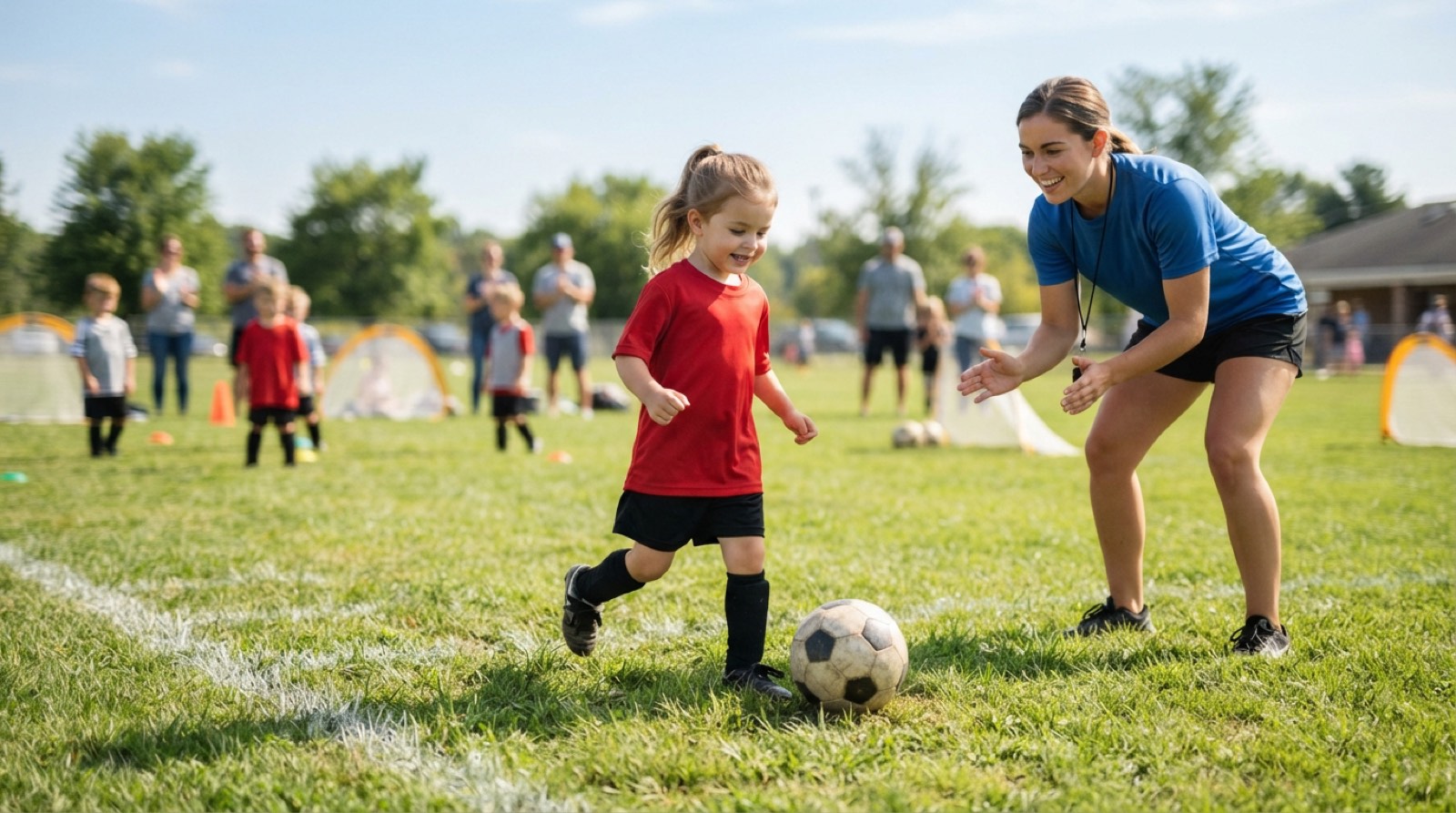
Your child’s first soccer practice can feel bigger to the parent than to the player. You are wondering what to bring, where to stand, whether your child will listen, and if they will be behind everyone else.
I’ve coached a lot of first practices in Temecula, and the truth is simple: your child does not need to be ready-made. They need water, shin guards, a ball if the coach asks for one, and a calm adult who lets them try.
Key takeaways
- A first practice should feel welcoming, simple, and active.
- Bring water, shin guards, cleats or athletic shoes, and a labeled ball.
- Expect warm-ups, basic ball touches, a few games, and short coaching points.
- Parent behavior matters: support from the sideline, but let the coach coach.
- If your child is new, start with the right fit before worrying about teams.
What should you expect at a first soccer practice?
Expect a simple session: arrival, warm-up, ball touches, a few teaching moments, and a small-sided game. The coach is not judging your child like a final exam. They are looking at comfort, effort, listening, and how your child responds to teammates. For new players, a good first practice should build trust before it builds tactics.
Most beginner practices in Temecula, Murrieta, Menifee, and Lake Elsinore follow the same rhythm. Kids arrive with a little nervous energy. The coach gets them moving quickly. Then the group works through basic touches, dribbling, passing, or shooting. The session usually ends with some kind of game, because kids learn faster when the ball is moving and the problem feels real.
If your child has never played organized soccer, read What Age Should Kids Start Soccer? before you overthink the first day. Readiness is not just age. It is also attention span, confidence, and whether the environment fits the child.
What to bring to the first practice
Bring the basics, and skip the extras. A first soccer practice does not need a trunk full of gear. Your child should have shin guards, shoes that work on grass, a full water bottle, and a ball if the coach or club asked for one. Label the gear, because soccer bags all start to look alike.
| Item | Bring it? | Coach’s note |
|---|---|---|
| Water bottle | Yes | Fill it before you leave home |
| Shin guards | Yes | They go under the socks |
| Cleats | Best on grass | Athletic shoes are fine for some first sessions |
| Soccer ball | Usually | Ask the coach what size |
| Snacks | Optional | Keep them simple for after practice |
| New uniform | Not yet | Wait until the club assigns it |
For ball size, U.S. Soccer’s Player Development Initiatives use a size 3 ball for U6-U8, size 4 for U9-U12, and size 5 for U13 and older in the U.S. Youth Soccer PDI document. If you are still shopping, our youth soccer gear checklist keeps it simple.
How to dress your child for practice
Dress your child for movement, not photos. Athletic shorts, a breathable shirt, shin guards, long socks, and cleats or athletic shoes are enough. In warm Inland Empire weather, choose light clothing and send more water than you think they need. Comfort matters more than matching gear on day one.
The CDC recommends children ages 6-17 get 60 minutes or more of moderate-to-vigorous physical activity every day. Soccer practice helps because kids run, stop, turn, jump, and kick without feeling like they are doing a workout. Clothing should help that movement, not get in the way.
For younger children, avoid anything that needs constant fixing. Loose hats fall off. Untied sweatshirts drag. Socks that are too short slide under the shin guard. The cleaner the setup, the more attention your child has for the coach and the ball.
What the coach is watching for
A good coach watches more than skill. At a first practice, I look for how a child listens, tries again after mistakes, treats teammates, and handles simple instruction. A beginner with effort and joy is in a good place. Ball control can be taught; attitude is the foundation.
Parents often ask, “Will my child be behind?” Maybe. But behind what? If the group is right for their age and level, the first practice is only a starting point. I would rather see a child make a mistake and smile than freeze because an adult made the day feel too big.
If your child already wants more challenge, compare the path in Rec vs. Competitive Youth Soccer. If they are brand new, the first goal is much smaller: leave the field wanting to return.
The parent’s job on the sideline
Your job is to be calm, present, and quiet enough that your child can hear the coach. Cheer effort. Smile after mistakes. Do not correct every touch from the sideline. The first practice is where your child begins a relationship with the coach, the team, and the game.
Aspen Institute Project Play reports that the average child quits sports by age 11, and the top reason is that it stopped being fun. Parents can help protect the fun. A child who hears three voices during practice has to choose which adult to please. That is too much.
If you want a full guide, I wrote more on supporting your young athlete from the sideline. For day one, the short version is this: encourage, then let the session belong to your child.
What if your child cries, freezes, or refuses to join?
Do not panic. New places, new kids, and a coach they do not know can feel like a lot. Give your child a minute, tell the coach what is happening, and avoid turning the moment into a lecture. Sometimes watching the first drill is the bridge into joining.
The American Academy of Pediatrics says most children are ready for organized team sports around age 6, while younger children often need free play more than competition. That does not mean a younger child cannot try soccer. It means the adults should keep expectations small.
I have seen kids cling to a parent for half a practice, then run into the final game like they have played for years. I have also seen kids need a second visit. Both are normal. The question is not, “Did they perform?” It is, “Did we make it safe enough to try again?”
When should you consider a next step?
Consider the next step when your child wants to return, listens well enough to be safe, and enjoys being part of the group. That might mean another beginner session, a free evaluation, a recreational team, or extra skills work. Do not rush the path because another child looks ahead.
If your child is ready for more touches, soccer training can help. If you are trying to find the right starting level, a free evaluation gives you a low-pressure answer. Families comparing local options can also read our Temecula youth soccer guide.
For parents in Temecula, Murrieta, Menifee, Lake Elsinore, Wildomar, and French Valley, the best first practice is not the fanciest one. It is the one your child leaves saying, “Can I play again?”
Frequently asked questions
What should my child bring to a first soccer practice?
Bring a properly sized soccer ball, shin guards, cleats or athletic shoes, a full water bottle, and weather-appropriate clothes. If your child has not been assigned a team uniform yet, simple athletic shorts and a comfortable shirt are fine. Label everything before you leave home.
Will my child need cleats for the first soccer practice?
Cleats help on grass, but they are not always required for a first beginner session. Athletic shoes are usually fine for a trial practice or first evaluation. Once your child joins regular practices, soccer cleats and shin guards become the normal setup for safety and comfort.
What happens if my child is nervous at soccer practice?
Nerves are normal. Tell the coach before practice, arrive a little early, and let your child watch the group for a minute. A good coach will start with simple touches, pair them with kind teammates, and give them a small win early.
Should parents stay during the first soccer practice?
For younger kids, staying nearby is usually smart. Give your child a quick wave, then let the coach lead. For older players, watch from the sideline without coaching. Your calm presence helps, but too much instruction from the sideline can make practice harder.
How do I know if my child liked the first practice?
Ask simple questions on the ride home: what was fun, what felt hard, and whether they want to go again. Do not judge only by performance. Some kids look quiet during practice but still love it. The best early sign is curiosity.