Youth Soccer Guide
Youth Soccer in Temecula: A Parent's Guide
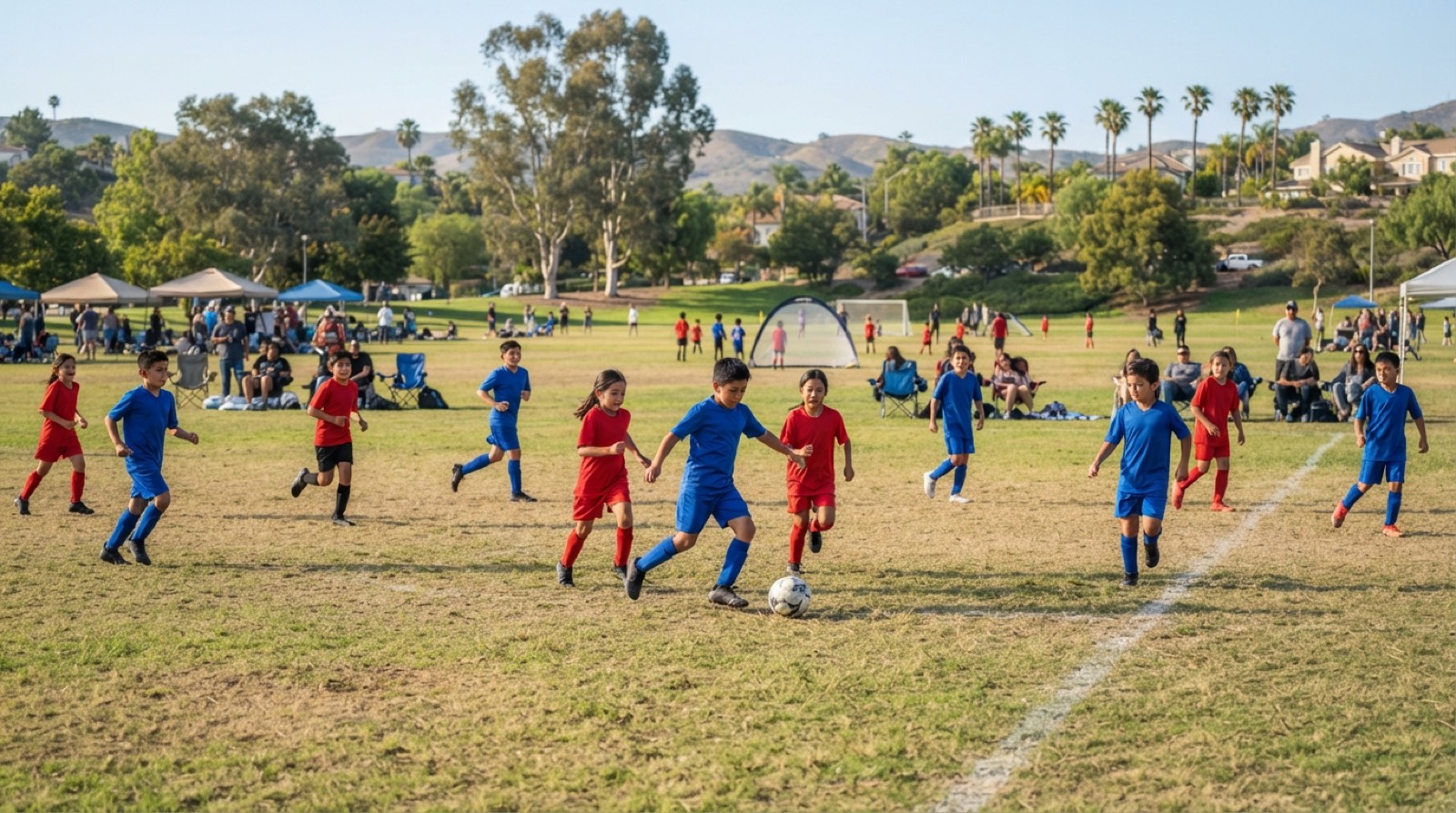
Temecula parents usually ask me the same thing in different words: “Where should my child play soccer, and how do I know it is the right place?”
That is a fair question. Youth soccer in Temecula can mean a first ball at the park, a local rec season, extra skills training, or a full competitive club team. The best choice depends on your child’s age, confidence, schedule, and how much they already love the game.
Key takeaways
- Start with your child’s age and interest, not the most advanced team available.
- Kids need daily movement; soccer can make that goal easier for busy families.
- Coaching quality matters more than uniforms, standings, or early trophies.
- Recreational and competitive soccer both have a place in a healthy pathway.
- Temecula families should also compare options in Murrieta, Menifee, Lake Elsinore, and Wildomar by fit, not just distance.
Youth soccer in Temecula: the quick answer
For most Temecula families, the right youth soccer path starts with a low-pressure environment, age-appropriate coaching, and a clear next step if the child wants more. Beginners need touches, joy, and safety. More driven players need structure, feedback, and a club pathway that does not rush them too early.
If your child is brand new, begin with a developmental or recreational setting. If they already ask to train, compete hard, and play outside practice, then a free evaluation can help place them at the right level.
Why soccer fits Temecula families
Soccer works well here because it matches the way many Southwest Riverside families live: school, homework, traffic, hot afternoons, and weekends split between siblings. A practice gives kids a real movement block without needing much equipment or a specialized facility.
The movement piece matters. The Centers for Disease Control and Prevention says children ages 6-17 should get 60 minutes or more of moderate-to-vigorous physical activity every day, with muscle- and bone-strengthening activity at least 3 days a week. Soccer covers running, jumping, cutting, balance, and decision-making in one game.
I also like soccer for Temecula kids because it is social. New players learn names quickly. Shy players get a role. Energetic players get a healthy outlet. Competitive players get a ladder to climb without leaving the local soccer community too soon.
What age group should my child join?
Most children are ready for organized team soccer around age 6, but younger children can still benefit from playful movement with a ball. The American Academy of Pediatrics says children before age 6 usually lack the motor skills, balance, and attention span for organized sports, while by age 6 most can handle simple organized sports.
Use this as a guide, not a hard gate:
| Child’s stage | Best soccer fit | What parents should look for |
|---|---|---|
| Preschool | Play-based ball work | Movement, smiles, short instructions |
| Early elementary | Beginner team soccer | Small fields, lots of touches, no pressure |
| Upper elementary | Developmental or rec-plus | Skill building, confidence, fair playing time |
| Middle school | Competitive option if ready | Better training habits, feedback, commitment |
| High school | Club, school, or training mix | Clear goals, recovery, realistic expectations |
For a deeper age breakdown, read What Age Should Kids Start Soccer?. That post explains the youth age-group ladder in plain language.
Recreational or competitive: how to choose
Recreational soccer is usually the better starting point for young or new players. Competitive soccer fits when a child already loves the game, wants harder sessions, and handles being coached. The mistake is treating competitive soccer as proof that a child is “serious” before they have had time to enjoy the sport.
I have seen both paths work. Some players need a relaxed first season before they believe they belong. Others show up already hungry for more. The child tells you which path fits by how they respond after practice: tired but happy, or tired and done.
| Question | Recreational fit | Competitive fit |
|---|---|---|
| Does your child ask to play outside practice? | Sometimes | Often |
| Can they handle feedback? | Still learning | Usually yes |
| Is the family ready for travel and extra time? | Not necessary | More likely |
| Is the goal fun and basics? | Yes | Partly, plus development |
| Is the child driving the move? | Not yet | Yes |
For the full trade-off, see Rec vs. Competitive Youth Soccer, then compare that with your child’s current season.
What to ask before joining a club
A good youth soccer club should be able to explain how it develops players, keeps them safe, and places them at the right level. If the conversation is only about winning, rankings, or getting on the top team, slow down and ask better questions.
Start with these:
- What age group and level would my child join?
- What licenses or training do the coaches have?
- Are coaches background-checked?
- How many players are in a training group?
- How does a player move from beginner to competitive?
- What happens if my child is nervous or new?
Coaching matters because kids leave sports when the adult environment stops being fun. The Aspen Institute Project Play found the average child quits a sport by age 11, after 2.86 years, and 36% say they quit because it stopped being fun. That is why I care more about the coach-player relationship than the color of the jersey.
What Temecula parents should watch for
The best program is not always the biggest or the loudest. Watch a session before you commit. You can learn quickly: are kids moving, or standing in lines? Is the coach teaching, or only yelling? Do beginners get attention, or only the strongest players?
I would look for these signs:
- Kids touch the ball often.
- Coaches correct clearly without embarrassing players.
- The session fits the age group.
- Parents are calm on the sideline.
- Players leave sweaty and smiling.
- The club can explain the next step without pressuring you.
For families comparing multiple sports, Soccer vs. Basketball, Baseball & Football gives a fair look at safety, cost, and fitness.
Gear, heat, and first-week basics
For a first soccer session, keep it simple: shin guards, water, athletic clothes, and cleats if you already own them. Do not buy the most expensive gear before your child has even tried the sport. Fit and comfort matter more than brand.
Something I do want parents to take seriously in Temecula is heat. Summer and early fall practices can feel different here than coastal Southern California. The CDC Heat Health guidance tells families to stay hydrated, take shade breaks, and watch symptoms like heavy sweating, dizziness, headache, weakness, and nausea. I cover that in more detail in Keeping Kids Safe in the Heat.
Starting locally without overthinking it
The simplest first step is to let your child try a session and see how they respond. Not every child needs a competitive team. Not every child needs private training. Some need confidence. Some need touches. Some need a coach who knows when to push and when to smile.
If you are in Temecula, Murrieta, Menifee, Lake Elsinore, Wildomar, Winchester, or French Valley, compare programs by fit: age group, coach, schedule, pathway, and safety. SWSC has served Temecula families since 2001, and our goal is to place each child where they can grow. When you are ready, start with a free evaluation, or read more about competitive soccer and skills training.
Frequently asked questions
What is the best age to start youth soccer in Temecula?
Most kids are ready for organized soccer around age 6, but younger children can start with playful ball activities. Look for short sessions, small fields, and patient coaching. The right age is when your child can follow simple directions and still wants to come back.
How do I choose a youth soccer club in Temecula?
Start with coaching quality, safety checks, age-appropriate teams, and whether the club offers a real path from beginner to competitive play. Ask how players are placed, what licenses coaches hold, and how pressure is handled. A good club explains fit before it talks about trophies.
Should my child play recreational or competitive soccer first?
Most new or young players should start recreational or developmental, then move up when they want more challenge. Competitive soccer fits children who already love the game, handle feedback well, and want extra training. The move should follow the child's motivation, not a parent's timeline.
What should my child bring to a first soccer evaluation?
Bring cleats or athletic shoes, shin guards, water, comfortable clothes, and a ball if you have one. Do not worry about buying expensive gear before the first session. The main goal is to see how your child moves, listens, competes, and enjoys the game.
Does SWSC serve Murrieta and Menifee families too?
Yes. SWSC is based in Temecula and serves families across Southwest Riverside County, including Murrieta, Menifee, Lake Elsinore, Wildomar, Winchester, and French Valley. For many families, the right club is not the closest field; it is the best developmental fit.