
Youth Soccer Guide
Soccer vs. Basketball, Baseball & Football: Which Sport Is Right for Your Child?
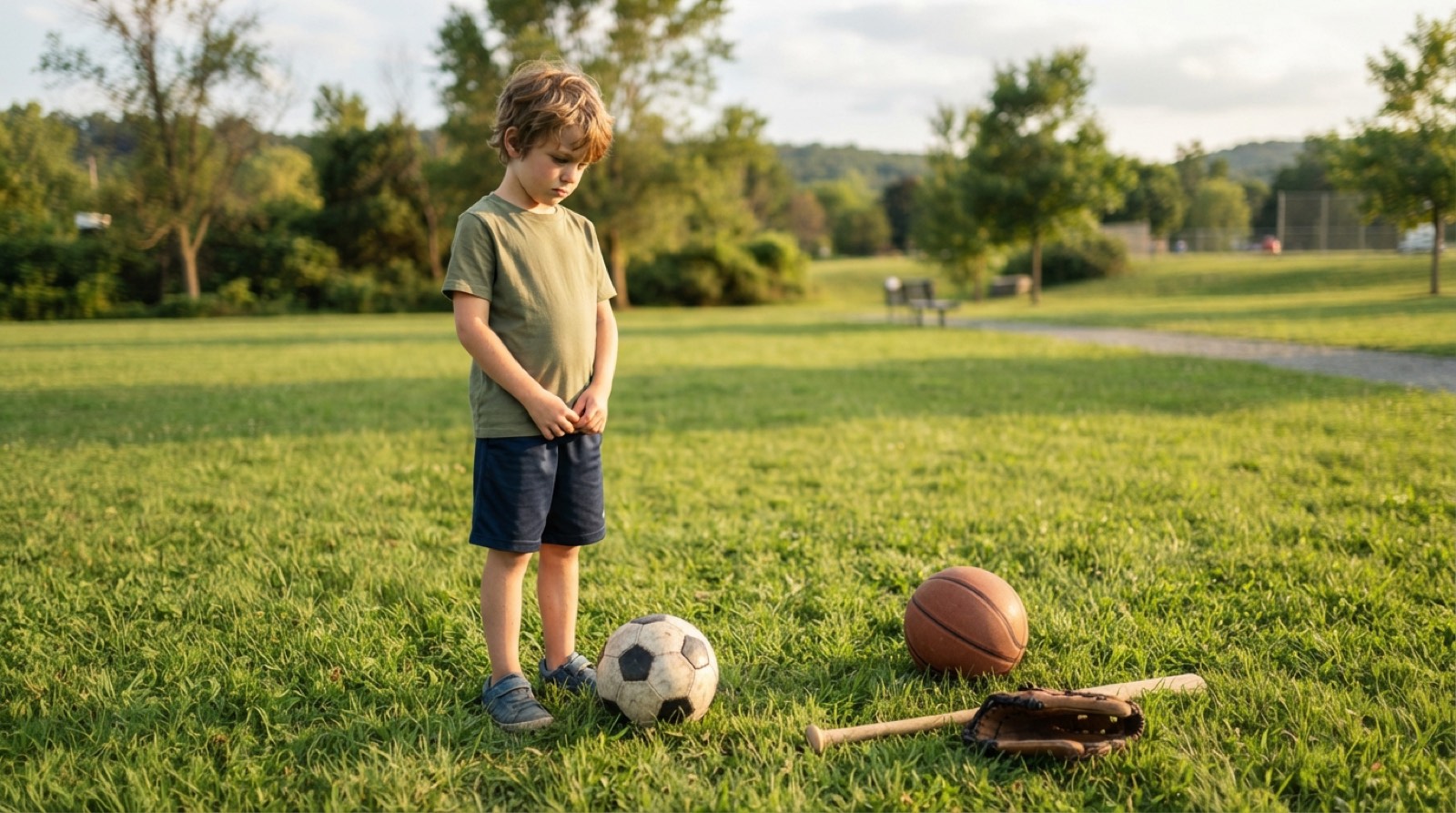
Choosing your child’s first sport can feel strangely high-stakes. Should it be soccer? Basketball? Baseball? Football? Parents ask me this all the time, and they expect a soccer coach to just say “soccer.”
I won’t do that. My kids grew up playing several sports, and the research agrees that’s the smart move for young children. So here is an even-handed comparison — cost, safety, fitness, and fit — with the sources, including where soccer honestly comes up short.
Key takeaways
- For kids under ~12, playing more than one sport beats picking a single one.
- Soccer is the most aerobically active of the four sports — and the cheapest to start.
- Football has by far the highest concussion rate; baseball the lowest; soccer sits in between.
- Soccer is also the most expensive on average once travel and club fees are counted.
- The fastest-growing youth team sport right now isn’t soccer — it’s flag football.
Soccer vs. basketball, baseball, and football: the quick answer
There is no single “best” sport — the right pick depends on your child’s temperament, your budget, and your tolerance for contact. That said, soccer scores well on the three things parents ask about most: it is the most aerobic of the four, one of the safest for the head after baseball, and the cheapest to start. Its weak spot is cost at the competitive level. Here’s the full picture.
| Factor | Soccer | Basketball | Baseball | Football (tackle) |
|---|---|---|---|---|
| Avg. annual cost per child | $1,188 (highest) | $1,002 | $714 | $581 (lowest) |
| Concussion rate (per 10,000 exposures)* | 3.3 boys / 7.1 girls | 2.2 boys / 4.2 girls | 1.0 | 10.2 |
| Aerobic activity (MET rank of 20 sports) | 4th–8th (highest) | 11th–15th | 18th | 12th |
| Gear to start | Ball, shin guards, cleats | Ball, shoes | Glove, bat, helmet | Full pads + helmet |
*High-school injury surveillance; an “exposure” is one athlete in one game or practice. Sources below.
How many kids actually play each sport
Basketball is the most-played youth team sport in America, followed by baseball, then soccer, according to the Sports & Fitness Industry Association. At the high-school level, the National Federation of State High School Associations counted about 485,000 boys and 393,000 girls playing soccer in 2024–25.
One number I like to share with parents: at the high-school level, girls’ soccer now has more players than girls’ basketball. Soccer is not a niche sport for girls in this country — it’s a leading one.
Safety: concussion and injury rates by sport
This is where the sports genuinely differ, so it deserves real numbers. Using national high-school injury surveillance, the Aspen Institute’s Healthy Sport Index measured concussion rates per 10,000 athletic exposures:
| Sport | Concussion rate (per 10,000 exposures) |
|---|---|
| Football (boys) | 10.2 |
| Soccer (girls) | 7.1 |
| Basketball (girls) | 4.2 |
| Soccer (boys) | 3.3 |
| Basketball (boys) | 2.2 |
| Baseball (boys) | 1.0 |
Source: Aspen Healthy Sport Index (2016–17 surveillance data).
Two honest reads from that table. First, football’s concussion rate is roughly three times boys’ soccer and ten times baseball — the clearest safety gap in youth sports, and the reason many families choose flag football over tackle for young kids. That gap is also why many families pick flag football for young kids: the CDC’s HEADS UP program supports non-contact formats to limit head impacts for younger athletes.
Second — and I’ll be straight — soccer is not concussion-free. Girls’ soccer has the second-highest rate in that table. Soccer addresses this with rules, not pads: U.S. Soccer bans heading in games for players 10 and under. It’s a real risk, managed by good coaching, not an argument that soccer is dangerous.
Cost: which sport is easiest on the family budget
Now for soccer’s honest weak point. According to Aspen Institute Project Play, average annual spending runs $1,188 for soccer — the highest of the four sports — versus $1,002 for basketball, $714 for baseball, and $581 for tackle football. And youth-sports costs rose 46% over five years.
Why is soccer so pricey on average? Travel and club fees, not the game itself. To start soccer, a child needs only a ball, shin guards, and cleats — the lowest gear cost of the four. The expensive part is the travel-club ecosystem, which is optional and comes later. If budget is your main concern, recreational soccer is one of the most affordable ways for a child to be active. I unpack that choice in Rec vs. Competitive Youth Soccer.
Which sport gives kids the best workout
If your goal is fitness, soccer is hard to beat. In direct-observation research from the Healthy Sport Index, soccer ranked as the most aerobically active of these four sports for both boys and girls, with baseball near the bottom.
The reason is simple: in soccer, play rarely stops. Kids jog, sprint, turn, and accelerate almost continuously, building cardiovascular endurance. Basketball is intense but stop-start on a small court; baseball involves long stationary stretches; football mixes short bursts with huddles. Each builds different fitness — but for continuous aerobic exercise, soccer wins.
The trend nobody expects
One fact keeps me honest with parents: soccer is not the sport exploding right now. Between 2019 and 2024, regular participation among kids ages 6–12 was roughly flat for soccer (−3%) and basketball (−2%), while baseball fell 19% and tackle football fell 7%. The one team sport genuinely surging is flag football, up 14%, per Project Play’s State of Play 2025.
I share this because you’ll hear “soccer is booming” from people selling soccer. It’s a strong, stable, hugely popular sport — but don’t pick it because of hype. Pick it because it fits your kid.
The real answer for young kids: don’t specialize yet
This is the guidance parents least expect from a club director. For a child under about 12, which sport matters far less than how many. The American Academy of Pediatrics recommends delaying single-sport specialization until roughly age 15–16 and encouraging multi-sport play through puberty. Early specialization raises the odds of injury — the research the AAP reviews puts it about 27% higher — and adds burnout, without improving a child’s long-term success.
So the healthiest plan for most young kids is: play soccer and something else. Soccer fits beautifully as a foundational sport — its footwork, agility, and aerobic base carry over to almost everything.
So, is soccer the right pick?
For a young child in the Temecula Valley, soccer is one of the strongest first sports you can choose: cheap to start, great for fitness, and safer for the head than the contact sports — as long as you keep it fun and multi-sport at first. Its cost only climbs if you chase the competitive track early, which most kids don’t need.
Still deciding when to start? Read What Age Should Kids Start Soccer? next, or see the full case in Is Soccer Good for Kids?. When your child is ready to give it a try, a free evaluation is a low-pressure way to see how they take to the ball.
Frequently asked questions
Which sport is best for a young child?
For kids under about 12, the best sport is usually more than one. Pediatricians recommend multi-sport play and delaying single-sport specialization. Among the options, soccer stands out for being the most aerobic and the cheapest to start — but the healthiest choice is whichever your child enjoys enough to keep doing.
Is soccer safer than football for kids?
On concussion rates, yes. High-school injury data show football's concussion rate is roughly three times boys' soccer and far higher than baseball. Soccer is not risk-free — girls' soccer has a notable concussion rate — but it avoids the repeated head contact of tackle football, which is why many families choose it or flag football for younger kids.
Which youth sport is the most expensive?
Soccer, on average. Aspen Institute data put average annual soccer spending at $1,188 per child — the highest of the major team sports, ahead of basketball ($1,002), baseball ($714), and tackle football ($581). The high figure reflects travel and club fees; entry-level recreational soccer needs only a ball, shin guards, and cleats.
Which sport gives kids the best workout?
Soccer. Direct-observation research from the Aspen Healthy Sport Index ranked soccer as the most aerobically active of the four sports for both boys and girls, ahead of basketball, football, and baseball. Because play rarely stops, kids run close to continuously — building cardiovascular fitness a stop-start sport can't match.
Should my child play just one sport or several?
Several, especially before puberty. The American Academy of Pediatrics recommends delaying single-sport specialization until roughly age 15–16, because early specialization raises injury and burnout risk without improving long-term success. Playing multiple sports builds broader athletic skills and keeps the experience fun, which is what keeps kids in the game.