Youth Soccer Guide
The Best Summer Soccer Camps in the Temecula Valley: A Parent's Guide
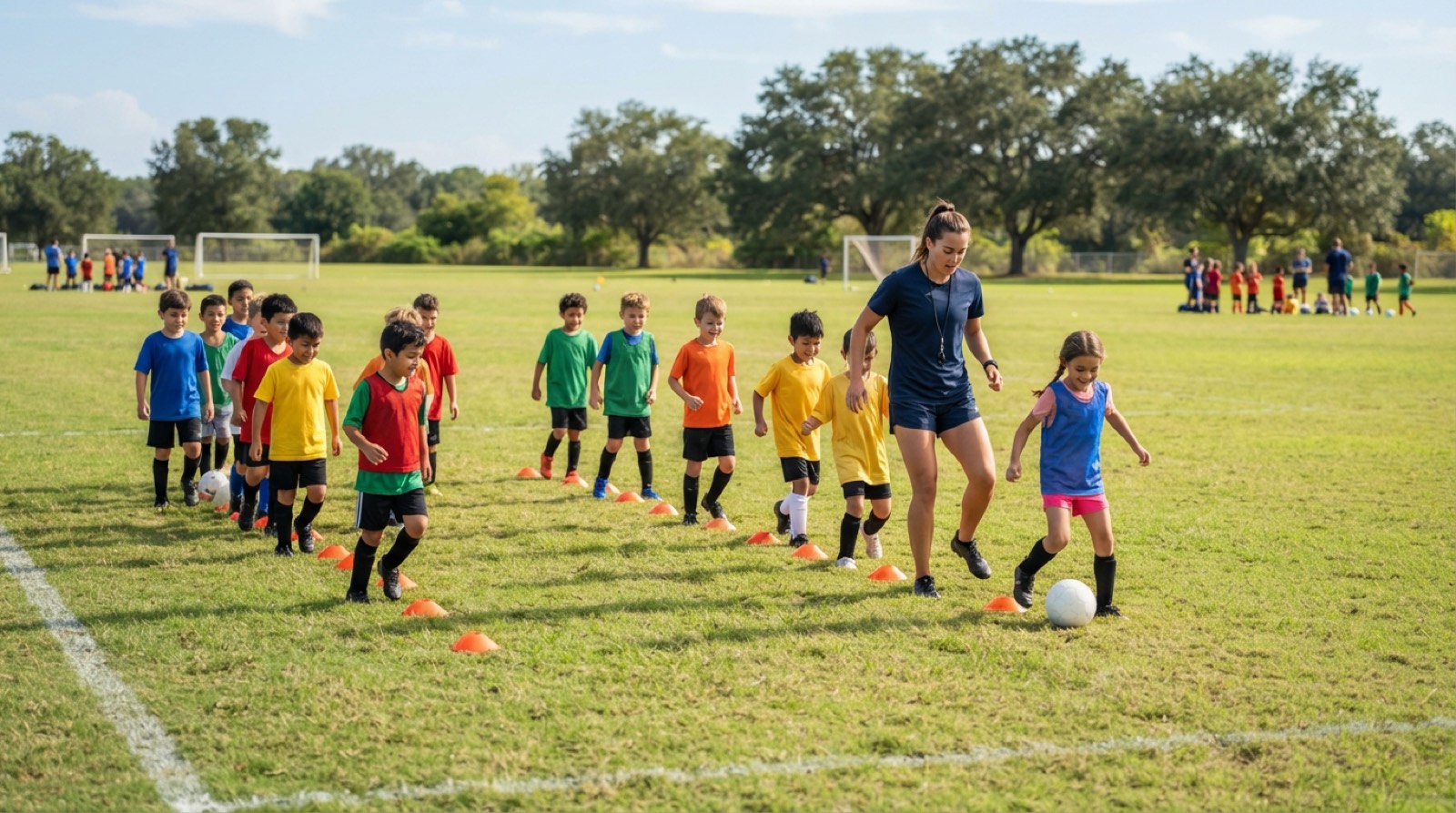
Summer soccer camp can be a great fit for Temecula kids - or a hot, expensive week that does not match the child. I have seen both.
The best soccer camp is not the one with the flashiest flyer. It is the one that fits your child’s age, level, confidence, and summer schedule while keeping safety first. If you are comparing options in Temecula, Murrieta, Menifee, Lake Elsinore, or Wildomar, use this guide before you sign up.
Key takeaways
- Choose a camp by age fit, coach quality, and safety plan before anything else.
- Beginners need fun, touches, and confidence, not long lectures or pressure.
- Summer heat changes the plan in Temecula; ask about water, shade, and timing.
- A camp should have groups by age or level so no child is lost in the middle.
- Camp is for momentum; training or a free evaluation can come later.
What is the best soccer camp in Temecula?
The best soccer camp in Temecula is the one that matches your child’s age, level, and personality while using trained coaches and a clear heat-safety plan. For beginners, that means short instructions, small groups, and lots of ball touches. For experienced players, it means harder training without turning summer into burnout.
I would not pick by name alone. Watch how the camp talks about kids. If the promise is all trophies, rankings, or “elite” language for every age, slow down. Good camps explain what the child will actually do each day.
Why summer camp helps kids stay active
Summer can be a strange season for kids. School structure disappears, screens get easier, and activity can drop unless families plan for it. The CDC says children ages 6-17 need at least 60 minutes of moderate-to-vigorous activity every day, with muscle- and bone-strengthening activity at least 3 days a week.
A soccer camp can cover that movement in a way kids enjoy. Running, cutting, passing, shooting, and small-sided games build fitness without making it feel like a workout. The trick is balance. In Temecula summer, the goal is not to exhaust a child by noon. The goal is to build skill, confidence, and a reason to keep playing.
For the bigger case on why soccer is a strong youth sport, read Is Soccer Good for Kids?.
How to compare camp formats
Not every camp serves the same player, so compare the format before comparing logos. Some are built for beginners, some for competitive players, and some are really child care with a soccer ball. None of those is automatically wrong, but the fit matters for your child.
| Camp type | Best for | What to ask |
|---|---|---|
| Beginner camp | New or nervous players | Are groups small and instructions simple? |
| Skills camp | Players who want more touches | What skills are trained each day? |
| Competitive camp | Experienced, driven players | How are players grouped by level? |
| Half-day camp | Younger kids or hot weeks | Where do players rest and refill water? |
| Full-day camp | Older kids with stamina | How much time is true soccer vs. supervision? |
If your child is still deciding whether soccer is their sport, start with a beginner or half-day format. If they already play and ask for more, a skills camp or training program may fit better.
What age is right for soccer camp?
Most children handle organized team sport best around age 6, while ages 2-5 usually need play-based movement instead of formal training. The American Academy of Pediatrics says before age 6 most children lack the motor skills, balance, and attention span for organized sports. By age 6, many can manage simple organized sport.
That does not mean a preschooler cannot touch a ball. It means the session should look like play: short activities, simple games, parents nearby if needed, and no pressure to perform. I would rather see a 4-year-old leave wanting more than drag through a camp built for older kids.
For a deeper age breakdown, use What Age Should Kids Start Soccer? before choosing a camp.
Heat safety matters in the Temecula Valley
In Temecula, Murrieta, Menifee, and Lake Elsinore, summer heat is not a footnote. A good camp should tell you when sessions run, how often kids drink, where shade is available, and what coaches do when a player looks off. If that answer is vague, keep asking.
The CDC Heat Health guidance tells families to stay hydrated, stay cool, and watch symptoms such as heavy sweating, dizziness, headache, weakness, and nausea. On a soccer field, I also watch the quiet child who stops acting like themselves.
Ask the camp these heat questions:
- Are water breaks scheduled or only when kids ask?
- Is there shade or indoor recovery time?
- Do coaches reduce intensity on hot days?
- What happens if a child has a headache or dizziness?
- Can younger players leave early if they are done?
I cover the full heat plan in Keeping Kids Safe in the Heat.
Coaching quality is the camp
A soccer camp is only as good as the adults running it. Cones, shirts, and social media clips do not teach children. Coaches do. I want to know who is on the field, how they correct mistakes, and whether they understand the age group in front of them.
The reason is simple: bad adult pressure pushes kids out. The Aspen Institute Project Play survey found the average child quits sports by age 11 after 2.86 years, and 36% said they quit because it stopped being fun. Project Play also reports that with trained coaches, only 5% of kids did not return the next season, compared with 26% under untrained coaches.
When you compare camps, ask:
- What coaching licenses or training do staff have?
- Are coaches background-checked?
- How are kids grouped by age and level?
- How are mistakes corrected?
- What is the plan for a nervous beginner?
If a camp cannot answer those plainly, that tells you something.
What your child should bring
For camp, pack simple gear that protects your child, handles heat, and does not distract from playing. Do not turn camp week into a shopping project. Your child needs shin guards, socks, water, comfortable clothes, and safe footwear. A ball is helpful if the camp asks for one.
| Item | Why it matters |
|---|---|
| Shin guards and socks | Basic protection for contact |
| Cleats or athletic shoes | Safe traction on grass or turf |
| Water bottle | Needed for every break |
| Sunscreen | Outdoor summer sessions need it |
| Light snack | Helps after a hard session |
| Extra shirt | Useful after hot practices |
For ball sizes, cleats, and first-week basics, use the Youth Soccer Gear Checklist. If the camp has a uniform or color request, follow that after you confirm placement.
Camp or club: which comes first?
Camp is a good first step when a child wants to try soccer without committing to a full season. Club or team play makes sense when the child wants a regular pathway, teammates, and a coach who sees them week after week. One is not a replacement for the other.
If your child lights up at camp, the next step may be a free evaluation. If they already play and want more challenge, compare recreational vs. competitive youth soccer before jumping into a bigger schedule.
I like camps for three reasons: kids get many touches in a short time, parents can observe interest, and coaches can spot where a player fits. That is enough. Camp does not need to solve your child’s whole soccer future.
Choosing locally without overthinking it
Temecula Valley parents have plenty of choices, and that can make a simple decision feel heavy. Keep it plain: age fit, coaching, safety, schedule, and whether your child wants to go back the next day. The right camp should make the game feel clearer, not more complicated.
If you are in Temecula, Murrieta, Menifee, Lake Elsinore, Wildomar, Winchester, or French Valley, choose the camp that treats your child like a young person first and a player second. At SWSC, that is how we think about summer soccer: development, safety, and joy in the same session. When your child is ready for the next step, start with training, competitive soccer, or a free evaluation.
Frequently asked questions
What should I look for in a Temecula soccer camp?
Look first at coaching, safety, age fit, and heat planning. A good camp keeps kids moving, groups players by ability, explains water breaks, and makes beginners feel welcome. Ask who coaches the sessions and whether the camp has a clear plan for hot Temecula afternoons.
Is soccer camp good for beginners?
Yes, if the camp is built for beginners. New players need lots of touches, simple instructions, patient coaches, and short games. Avoid camps that place every child in the same fast group. A beginner should leave tired, smiling, and more comfortable with the ball.
How long should a youth soccer camp be?
For younger players, shorter sessions are usually better than all-day intensity. Older players may handle longer training blocks, but rest, water, and shade still matter. Use your child's age, heat tolerance, and current activity level as the guide, not a brochure promise.
What should my child bring to summer soccer camp?
Pack shin guards, soccer socks, cleats or safe athletic shoes, a full water bottle, sunscreen, light clothes, and a snack. Label everything. In Temecula heat, water is part of the gear, not an extra. Younger kids should practice opening their bottle before camp.
Should my child do camp or private training?
Choose camp for touches, fun, confidence, and social learning. Choose private training when a player needs focused help on a specific skill. Many kids benefit from camp first, then targeted training later. If your child is new, start with the lowest-pressure option.