
Youth Soccer Guide
Why Multi-Sport Kids Do Better (And When to Specialize)
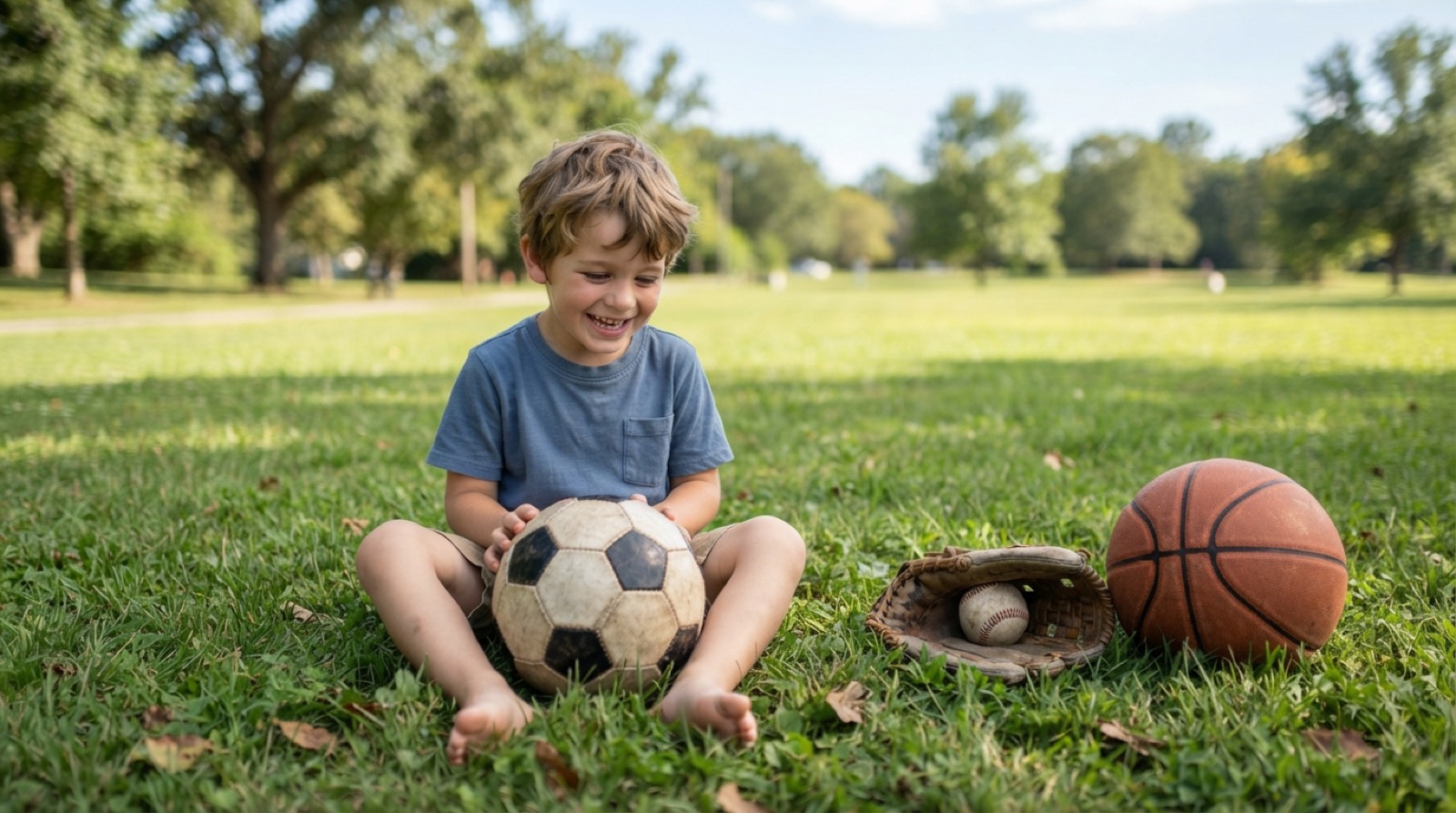
I understand why parents worry about this. Your child loves soccer, another family signs up for extra training, and suddenly you wonder if taking a basketball season or a swim block will put your player behind.
Most of the time, it will not. For young athletes, the better question is not “How early can we specialize?” It is “How do we keep this child healthy, athletic, and still in love with sport as a teenager?”
Key takeaways
- Most children should play more than one sport before specializing.
- The American Academy of Pediatrics recommends delaying single-sport specialization until about age 15–16.
- Weekly organized-sport hours should not routinely exceed the child’s age.
- Early specialization can raise overuse and burnout risk.
- Soccer can still be the favorite sport while your child plays other sports.
Multi-sport vs specialization: which is better for kids?
For most kids, multi-sport play is better before the mid-teen years. It builds broader movement skills, spreads physical stress, and keeps motivation fresh. Soccer can still be the main love, but it should not become the only organized sport too early unless the child is older, healthy, and asking for it.
This is not anti-soccer advice. I run a soccer club. I want kids to love the game deeply. But I have also seen talented young players burn out because adults treated an elementary-school season like a professional contract.
The American Academy of Pediatrics recommends delaying single-sport specialization until about age 15–16 for most athletes. The AAP also advises limiting one sport to no more than five days per week, taking at least one day off per week, and taking two to three months away from that sport each year. Those limits exist because growing bodies need variety and recovery.
What specialization really means
Specialization means one sport becomes the child’s only serious sport, usually with year-round training and fewer breaks. It is not the same as loving soccer most. A child can prefer soccer, watch soccer, and train soccer while still playing another sport during the year.
I use this table with parents:
| Path | What it looks like | Better fit |
|---|---|---|
| Multi-sport | Soccer plus another sport or activity during the year | Most children and pre-teens |
| Soccer-focused | Soccer is the favorite, with short breaks and some other activity | Older, motivated players |
| Specialized | One sport year-round with high training load | Mature teens with clear goals |
The danger is not passion. Passion is good. The danger is adult-designed volume: multiple teams, private sessions, tournaments, and no real offseason. That is where kids lose the freedom that made the sport fun.
If you are still choosing a level, Recreational vs. Competitive Youth Soccer explains how time and pressure change as players move up.
What the injury research says
The clearest warning sign is training load. In a Jayanthi et al. study of 1,190 young athletes, injured athletes reported 11.2 organized-sport hours per week compared with 9.1 hours for uninjured athletes. Athletes whose weekly sport hours exceeded their age had 2.07 times the odds of serious overuse injury.
The same study found that sports-specialized training was linked with higher injury odds even after accounting for weekly sport hours. That does not mean every specialized child will get hurt. It means the risk rises enough that parents should take the schedule seriously.
Use this simple check:
| Child’s age | Weekly organized-sport ceiling |
|---|---|
| 8 | Keep organized sport at or below 8 hours |
| 10 | Keep organized sport at or below 10 hours |
| 12 | Keep organized sport at or below 12 hours |
| 14 | Keep organized sport at or below 14 hours |
Source: Jayanthi et al., American Journal of Sports Medicine, via PubMed.
This is where “more” stops being lazy parenting insurance and becomes risk. If a ten-year-old plays club soccer, private training, futsal, and school sport in the same week, no one item looks extreme. The total can be.
Why variety helps soccer players
Multi-sport kids often become better soccer players because they learn more movement patterns. Basketball helps spacing and quick direction changes. Track builds running mechanics. Martial arts build balance. Swimming builds strength without pounding the legs. Baseball and softball teach timing and patience.
Soccer already demands a lot: acceleration, cutting, jumping, landing, scanning, passing, and emotional control. Different sports add different tools. A player who has learned to defend in basketball may understand body position better. A player who runs track may move more efficiently. A player who plays volleyball may jump and land with better control.
The CDC recommends children and teens get 60 minutes or more of daily physical activity, including muscle- and bone-strengthening work. Multi-sport play is one practical way to meet that guideline without repeating the same stress every month.
For a broader look at soccer’s fitness value, start with Is Soccer Good for Kids?.
When specializing starts to make sense
Specializing starts to make sense when the child is old enough, physically prepared, emotionally steady, and self-driven. That last part is important. If the parent is pushing and the child is complying, the timing is wrong. If the child is asking for more and handles rest like an athlete, the conversation changes.
Before a player specializes, I want to see:
- The player owns the goal, not the parent.
- Training load stays within health guidelines.
- The child has at least one real offseason.
- Pain is reported early, not hidden.
- School, sleep, and friendships are still intact.
This is also where a good club should tell you the truth. Some players are ready for a higher-commitment competitive soccer path. Some need another season of growth. A club that treats every child like a future pro is not being honest with families.
How to balance soccer with other sports
The easiest way is to protect seasons. Let soccer be primary during soccer season. Let another sport breathe during its season. Avoid stacking full commitments on top of each other unless your child is older and handling it well.
For Temecula families, that might mean soccer in fall, basketball or swim in winter, and a lighter spring. Or competitive soccer with a short summer break and no extra tournament team. The exact mix is less important than the principle: kids need training, play, and recovery.
Watch for these overload signs:
| Signal | What it may mean |
|---|---|
| Nagging pain | Repetitive stress needs attention |
| Mood change | Sport may be turning into pressure |
| Poor sleep | The schedule may be too heavy |
| Dreading practice | Motivation needs protection |
| Hiding injuries | The child feels unsafe telling the truth |
If you see those signs, reduce load before adding another session. The lazy fix is usually rest, not a new specialist.
The local answer for Temecula families
In Temecula, Murrieta, Menifee, Lake Elsinore, and Wildomar, families have plenty of sport choices. That is a good thing. Let kids sample them. Let soccer be important without making it the only identity they have.
If your child is ready for more soccer, book a free evaluation and ask directly how the schedule fits with other sports. If you are still comparing sports, Soccer vs. Other Sports for Kids is a useful place to start. The goal is not to win the busiest calendar. The goal is a healthy player who still loves the game years from now.
Frequently asked questions
Is it better for kids to play multiple sports?
For most children, yes. Multi-sport play builds broader movement skills, reduces repetitive stress, and keeps sport fresh. A child can still love soccer while playing basketball, baseball, swim, track, or martial arts. The goal is long-term development, not proving commitment too early.
When should a child specialize in soccer?
The American Academy of Pediatrics advises delaying single-sport specialization until about age 15–16 for most athletes. Before then, soccer can be the favorite sport without being the only sport. Specialize when the child is mature, self-driven, healthy, and asking for that commitment.
Will my child fall behind if they do not play soccer year-round?
Usually, no. Good players need ball touches, athletic movement, rest, and joy. Playing another sport for a season can improve coordination, decision-making, and competitiveness. If a child wants extra soccer, use short technical sessions rather than stacking teams and tournaments all year.
How many hours of sport are too many?
A practical rule from pediatric sports medicine is to keep weekly organized-sport hours at or below the child's age in years. A ten-year-old should not routinely carry more than ten organized hours. Watch mood, sleep, pain, and enthusiasm; those signals matter as much as the calendar.
Can competitive soccer and multi-sport play work together?
Yes, if the club respects the child's full schedule. Competitive soccer should not force a young player to quit every other activity. Tell the coach early, protect rest days, and avoid overlapping teams in the same season. A flexible pathway is healthier than year-round pressure.