
Youth Soccer Guide
Helping Your Child Handle Losing (and Winning)
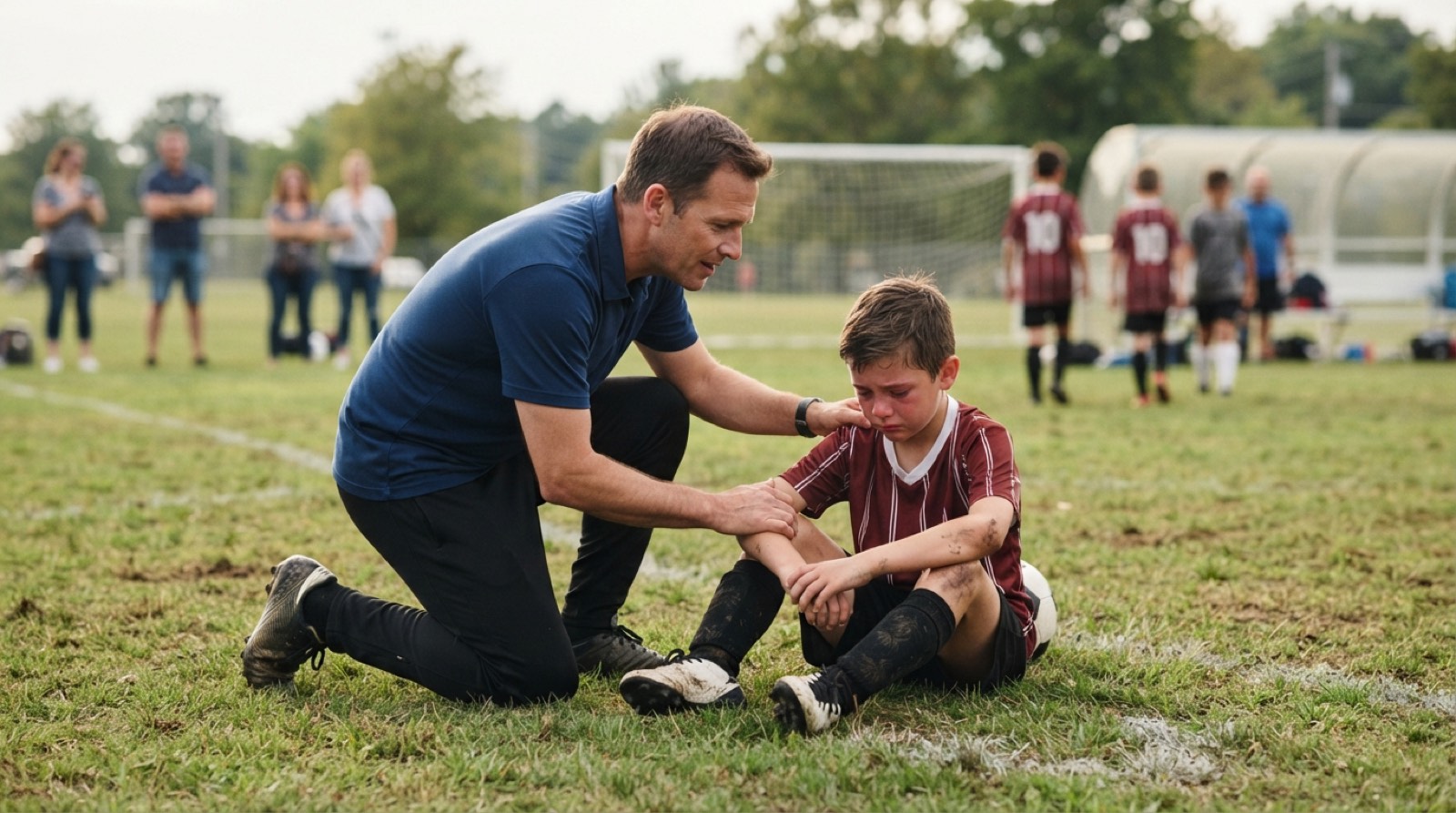
Every child loses. The question is not whether we can protect them from it. We cannot. The better question is whether soccer can teach them how to feel disappointment, breathe, learn, and come back.
I have watched children cry after finals, celebrate too loudly after easy wins, and blame everyone but themselves. Those moments are not failures. They are coaching chances.
Key takeaways
- Losing is a skill lesson, not a character verdict.
- The first parent sentence after a game should be calm and short.
- Winning needs coaching too; respect is learned.
- Fun matters because many kids quit when pressure takes over.
How should parents teach kids to handle losing?
Teach losing as recovery, not shame. Aspen Institute Project Play found 36% of kids who quit said sports stopped being fun, so the adult job is to help children learn from a loss without making the sport feel unsafe or personal.
After a hard game, your child does not need a speech in the parking lot. They need a calm adult. I like one sentence first: “I loved watching you play.” Then let the child talk, or let them be quiet.
Later, ask one learning question. Not ten. “What is one thing you want to try next time?” That moves the mind from blame to growth. If the loss still stings, that is fine. Feelings do not need to disappear before learning starts.
What to say right after a loss
Say less than you think. The same Aspen Project Play survey found coaches are the number-one source of pressure kids feel, and parents can become the second source when they analyze every mistake before the child is ready to listen.
Good postgame words are short and steady. “I am proud of your effort.” “That was a tough one.” “Do you want to talk now or later?” Those sentences keep the door open. They do not turn the ride home into a film session.
| Avoid saying | Try saying |
|---|---|
| ”Why didn’t you shoot?" | "What did you see on that play?" |
| "You should have won." | "That one hurt. What can we learn?" |
| "The ref cost you." | "Control what we can control.” |
If sideline pressure is part of the problem, read Supporting Your Young Athlete From the Sideline. Parents shape the game more than they think.
Teaching kids to win well, too
Winning well must be taught too, because children copy what adults reward on the sideline and in the handshake line. A PLOS ONE study of 11,235 children found team-sport kids had 17% lower social-problem scores than non-sport kids, but the social lesson depends on adult standards.
I want players to shake hands properly, thank referees, and avoid celebrating in a way that humiliates another child. Confidence is good. Disrespect is not confidence. It is insecurity with volume.
In my 25 years in Temecula, the best teams I have coached could win a big match and still clean up their bench. That tells me the adults are doing their job.
Winning is also a chance to teach perspective. Ask, “What helped us today?” That points children toward preparation, teamwork, and effort instead of luck or ego.
When your child blames the ref, teammates, or coach
Blame is normal at first, but it cannot become the habit after every hard match. Aspen Project Play reports the average child quits sports by age 11, so repeated blame is a sign to protect both accountability and enjoyment early.
I use three buckets with players: control, influence, and accept. You control effort, attitude, and preparation. You influence teammates by communicating well. You accept referee calls and bounces of the ball. That simple split gives a frustrated child somewhere to put their energy.
Parents can model it in the car. If we complain about the referee for twenty minutes, the child learns that losing is always someone else’s fault. If we say, “That call was hard, but what did we control?” we teach strength.
When does losing become a confidence problem?
Losing becomes a confidence problem when a child fears mistakes more than they enjoy playing or plays small to avoid blame. The PLOS ONE ABCD study linked team-sport participation with 10% lower anxious-depressed scores, but pressure-heavy environments can erase that benefit quickly.
Watch for avoidance. A child who suddenly hates practice, hides after games, or plays only to avoid criticism needs a reset. That may mean talking with the coach, lowering the level, or taking a short break.
The fastest way to rebuild confidence is not a pep talk. It is a task small enough for the child to complete under pressure: first touch forward, one brave tackle, one clear pass.
For more on the bigger benefit of sport, read Is Soccer Good for Kids?. The value is not only winning; it is the person the child becomes.
Keeping the lesson healthy over a season
Keep the ride home calm and the season long. Aspen Project Play found kids quit a sport after an average of 2.86 years, which means adults have only a short window to make sport feel worth staying in for children.
In Temecula, Murrieta, Menifee, Lake Elsinore, and Wildomar, I want soccer to be a place where children learn to compete without losing themselves. If your child needs a better fit, our free evaluation can help you choose the right level, and our training programs can build skills without panic.
Frequently asked questions
How do I teach my child to handle losing?
Start by naming the feeling, then ask what they learned. [Aspen Project Play](https://projectplay.org/news/kids-quit-most-sports-by-age-11) found 36% of kids who quit said sports stopped being fun, so the goal is helping your child recover without losing love for the game.
What should I say after my child loses a soccer game?
Keep it short: 'I loved watching you play.' Then wait. [Aspen Project Play](https://projectplay.org/news/kids-quit-most-sports-by-age-11) says coaches are the number-one source of pressure for kids, and parents add to it by replaying mistakes too soon. Ask one learning question later.
How should kids act when they win?
Winning well means respecting the opponent, thanking the referee, and noticing what the team did right. Youth team-sport participation is linked with 17% lower social-problem scores in a [PLOS ONE study](https://journals.plos.org/plosone/article?id=10.1371/journal.pone.0268583), but adults still have to teach teamwork.
When is losing too upsetting for a child?
If a child stays angry or ashamed long after games, avoids practice, or fears mistakes, take it seriously. [Aspen Project Play](https://projectplay.org/news/kids-quit-most-sports-by-age-11) found the average child quits sports by age 11. A reset with the coach can protect confidence.