
Youth Soccer Guide
Growth Spurts and Youth Soccer: Managing Aches and Injuries
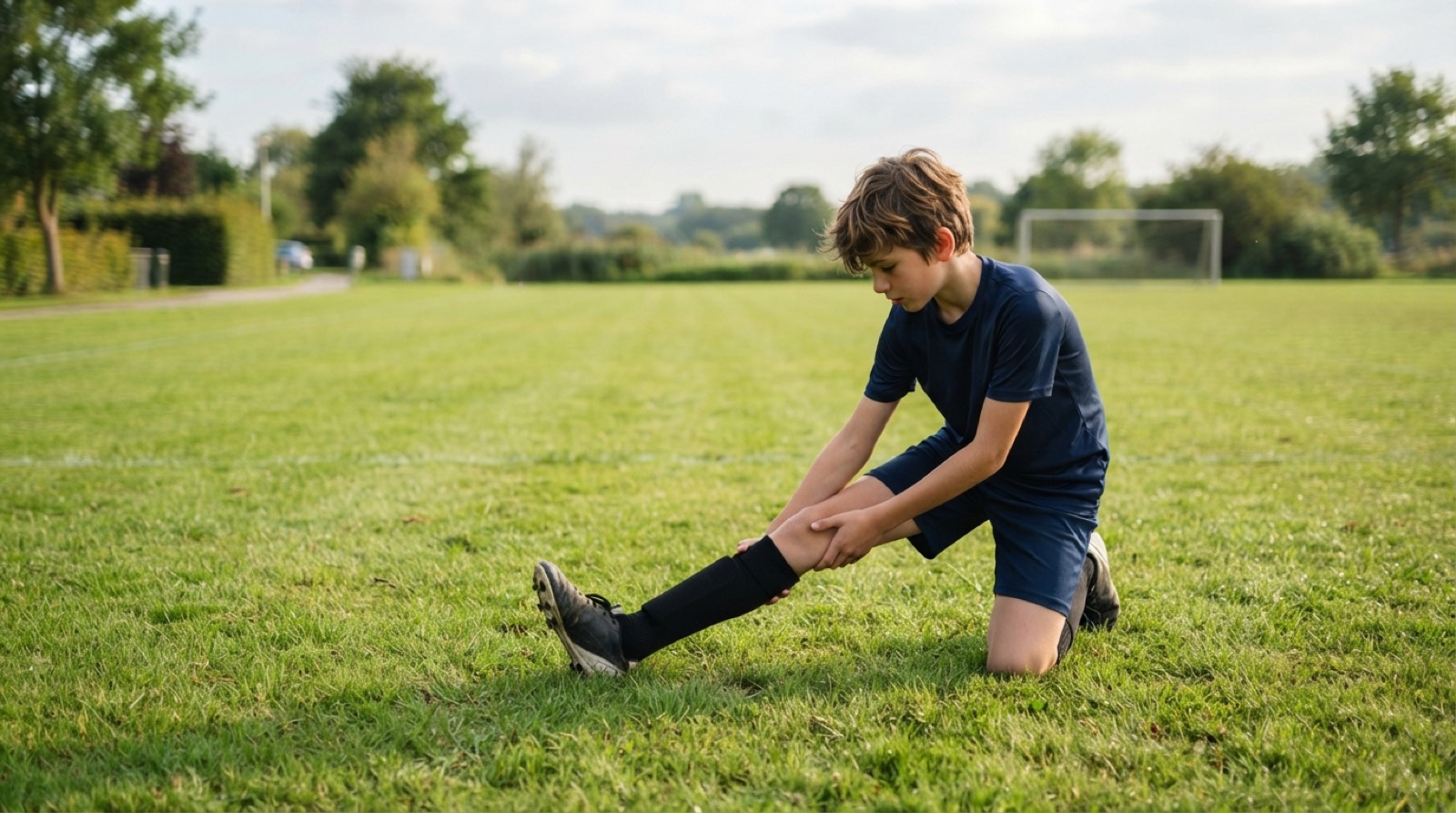
Growth spurts can make a good young player look awkward overnight. Touches get heavy. Knees ache. A child who used to glide suddenly trips over their own feet.
That does not mean something is wrong with them. It means the body is changing fast, and the soccer load has to respect that. The coach and parent job is to catch small aches before they become real injuries.
Key takeaways
- Growth spurts can affect coordination, soreness, and injury risk.
- About half of youth sports injuries are overuse injuries.
- Limping, sharp pain, and pain that worsens during play are red flags.
- Rest, load control, and honest communication beat pushing through.
How do growth spurts affect youth soccer injuries?
Growth spurts can raise injury risk because the body changes faster than coordination and strength catch up. The American Academy of Pediatrics says about half of youth sports injuries are overuse injuries, so repeated aches during growth deserve attention, not dismissal.
During a growth spurt, a player may feel tight, clumsy, or sore in new places. Their stride changes. Their timing changes. Even confidence can dip because the ball does not respond the same way.
I remind players that awkward phases pass. But we still adjust training. Less volume, better warm-ups, and earlier reporting can keep a child on the field longer.
Common aches during a growth spurt
Heel, knee, hip, and lower-leg aches are common during fast growth, especially when soccer hours rise quickly. A study of young athletes found serious overuse injury risk doubled when weekly sport hours exceeded the child’s age (Jayanthi et al., 2015).
That age-hours rule is not perfect, but it is useful. A ten-year-old playing twelve organized hours every week is in a different risk zone than a ten-year-old practicing twice and playing once.
| Pain pattern | Usually lower concern | Needs attention |
|---|---|---|
| Muscle soreness | Both sides, improves with warm-up | Sharp or one-sided |
| Heel or knee ache | Mild, settles with rest | Limping or worsening |
| Tightness | After hard week | Pain during normal walking |
If the pain changes how your child moves, stop and reassess. “Playing through” is not the lesson a growing body needs.
Signs a child should stop and rest
Stop when pain changes movement, even if the child wants to keep playing, and tell an adult what changed. The American Academy of Pediatrics says youth soccer injuries are often lower-limb sprains and contact injuries and are “largely preventable,” which means early decisions matter.
A limp is not a small detail. It means the body is protecting something. So does pain that gets worse as practice continues, pain that returns every session, or pain that wakes a child at night.
I tell players in Temecula the same thing every season: hiding pain does not make you tough. Speaking up early keeps you available for your team.
For broader risk and concussion guidance, read Is Soccer Safe for Kids?. Growth-spurt management is one part of the same safety picture.
How should training change during a growth spurt?
Training should keep skill work but reduce stress when the body is struggling or coordination looks off. The American Academy of Pediatrics recommends limiting organized sport to 5–6 days per week and taking 2–3 months away from one sport each year.
I like short technical work, more rest between high-speed actions, and fewer hard sessions stacked together. A growing player can still improve without turning every practice into a fitness test.
This is also a good time to avoid sudden jumps: extra private lessons, extra tournaments, and a new school team all at once. The body counts load from every source, even when each adult thinks their session is reasonable.
What parents can do at home
Parents can lower risk by tracking sleep, soreness, and weekly load during fast growth and asking one calm question after training. The CDC recommends 60 minutes of daily activity for children and teens, but growth phases call for smart activity, not endless organized training.
Ask three questions after practice: where does it hurt, did it change how you ran, and is it better or worse than last time? Keep the tone calm. Children hide pain when they think adults will panic or punish them.
A simple soreness note on your phone can help. If the same heel or knee shows up three sessions in a row, you have a pattern worth acting on.
For rest routines, see Sleep, Rest and Recovery for Young Soccer Players.
Choosing the right level in the Temecula Valley
Choose the level your child can recover from, not the busiest level you can find. Aspen Institute Project Play found the average child quits sports by age 11, so a schedule that keeps them healthy and happy is usually the winning schedule.
In Temecula, Murrieta, Menifee, Lake Elsinore, and Wildomar, families often have many soccer options. More is not always better during a growth spurt. If you need help matching your child’s level to their body and confidence, start with a free evaluation or ask about training that fits the season.
Frequently asked questions
Do growth spurts cause more soccer injuries?
They can raise risk because bones, muscles, coordination, and workload do not always change at the same speed. The [American Academy of Pediatrics](https://www.healthychildren.org/English/health-issues/injuries-emergencies/sports-injuries/Pages/Preventing-Overuse-Injuries.aspx) says about half of youth sports injuries are overuse injuries, so growth-spurt aches deserve early attention.
What aches are common during growth spurts?
Heel, knee, hip, and lower-leg aches are common complaints, especially when training jumps quickly. Pain should still be taken seriously. A [2015 sports-medicine study](https://pubmed.ncbi.nlm.nih.gov/25646361/) found athletes with serious overuse injuries often trained more weekly hours than their age in years.
When should my child stop playing?
Stop if pain changes running, causes limping, gets worse during play, or does not improve with rest. The [American Academy of Pediatrics](https://www.healthychildren.org/English/news/Pages/Soccer-Injuries-in-Children-and-Adolescents.aspx) describes many youth soccer injuries as preventable, and early rest often prevents a long absence.
How can parents reduce overuse injuries?
Keep weekly organized sport hours at or below the child's age, protect 1–2 rest days, and avoid year-round single-sport load. The [American Academy of Pediatrics](https://publications.aap.org/pediatrics/article/153/2/e2023065129/196435) recommends 2–3 months away from one sport each year for young athletes.