
Youth Soccer Guide
When Should Your Child Move Up to Competitive Soccer?
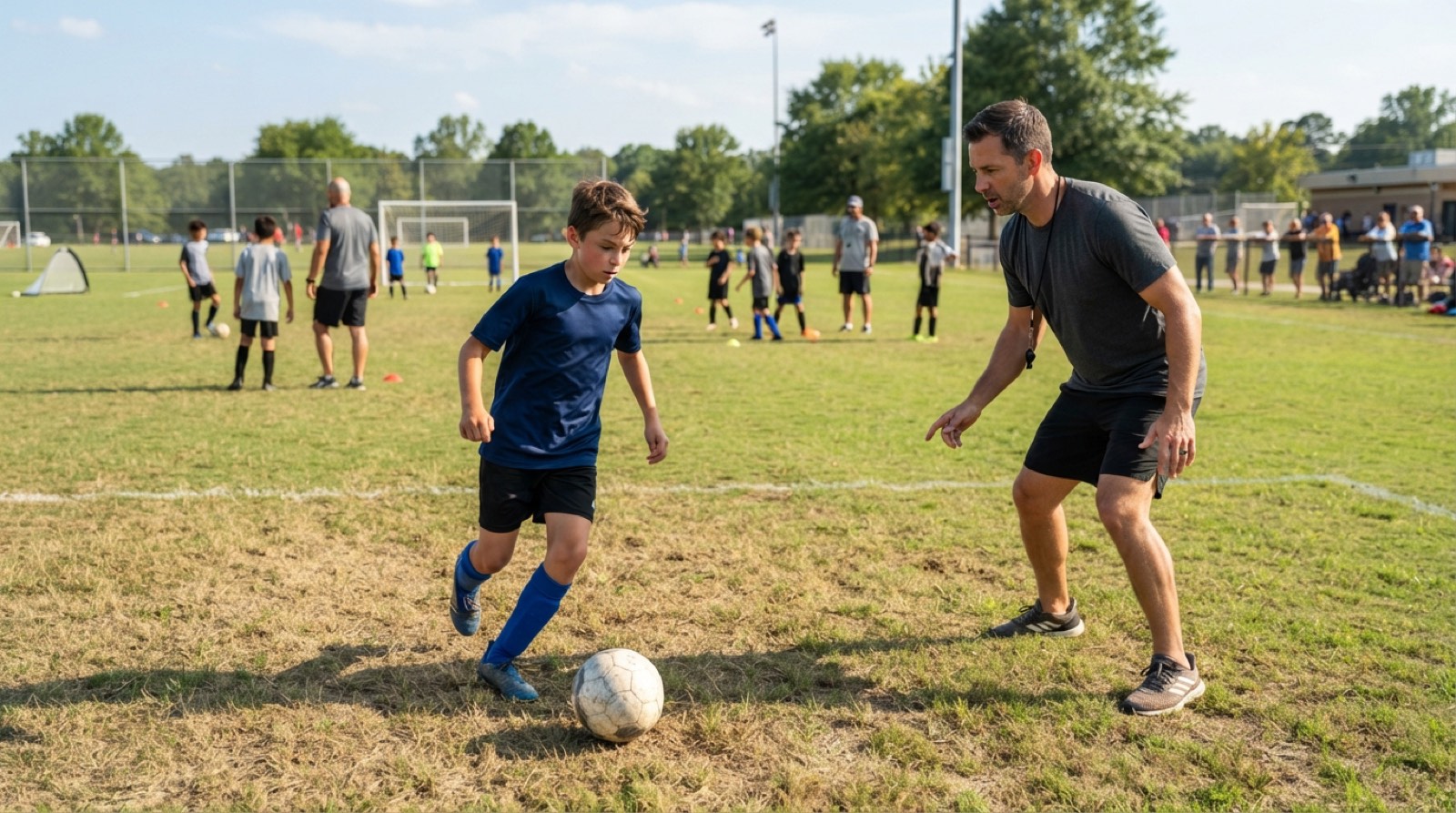
The hardest part of youth soccer is not teaching a child to pass. It is knowing when to raise the challenge and when to let the child grow where they are.
After 25 years coaching in Temecula, I have seen both mistakes: kids held back too long because parents feared pressure, and kids pushed up too early because adults were chasing status.
Key takeaways
- The child’s desire matters more than the parent’s timeline.
- Competitive soccer should add challenge, not steal joy.
- Readiness includes skill, attention, coachability, and family schedule.
- Early specialization has real injury and burnout risks.
- Use competitive soccer or a free evaluation only when the fit is clear.
When should a child move up to competitive soccer?
A child should move to competitive soccer when they love the game, want more challenge, respond well to coaching, and can handle the added time, travel, and pressure. Age helps, but readiness matters more. If the move is parent-driven, rushed, or based only on winning, wait.
Competitive soccer is not a badge. It is a better training environment for the right player at the right time.
I would rather see a child stay one season longer in the right environment than move early and lose confidence. Growth is not always a straight climb. Sometimes the best step up begins with owning the current level.
The clearest readiness signs
Ready players usually show you before they tell you. They touch the ball at home. They ask when practice is. They want harder games. They can lose and still come back. They listen when corrected, even if they need a minute.
| Readiness sign | What it looks like |
|---|---|
| Love of the game | They ask to play outside practice |
| Coachability | They try the correction, not just nod |
| Resilience | They recover after mistakes |
| Attention | They can follow a team plan |
| Family fit | The schedule does not break the home |
If your child has only one of those signs, stay patient. If they show most of them, it may be time to explore.
Age matters, but it is not the whole answer
The American Academy of Pediatrics says most children have basic motor skills for simple organized sports by age 6, while ages 10 to 12 are usually more ready for complex teamwork and strategy. That matches what I see on the field.
Some younger players are ready for more structure. Some older players need more time. The mistake is treating age like a switch.
If your child is still new to soccer, read What Age Should Kids Start Soccer? before you jump levels.
Rec vs. competitive: what changes
Competitive soccer changes more than the opponent. It changes expectations. Training is sharper. Players are selected. Travel can increase. Playing time may be earned differently. Families need to plan weekends around the team, so the decision affects the whole household.
| Question | Recreational soccer | Competitive soccer |
|---|---|---|
| Main goal | Fun and fundamentals | Development and stronger games |
| Entry | Open registration | Evaluation or tryout |
| Pressure | Lower | Higher |
| Travel | Mostly local | Can be regional |
| Best for | New or casual players | Motivated players ready for more |
For a deeper side-by-side, use Recreational vs. Competitive Youth Soccer. It is the guide I would want every parent to read first.
The danger of moving up too early
Moving too early can backfire. Aspen Project Play found the average child quits sports by age 11, after 2.86 years in a sport, and 36% quit because they stopped enjoying it or lost interest. That is the number I think about when adults want to rush.
A child who sits too much, feels overmatched, or hears constant correction can start to believe soccer is not for them. That is a bigger loss than missing one competitive season.
Challenge should stretch confidence, not erase it.
The training-load check
Competitive soccer adds hours. That can be healthy when it is managed, and risky when it is not. A clinical case-control study in young athletes found that playing more weekly sport hours than a child’s age was linked with higher odds of serious overuse injury, with an odds ratio of 2.07.
The American Academy of Pediatrics also notes that early intense specialization can raise overuse risk and recommends delaying single-sport specialization until about age 15 or 16.
That does not mean your child cannot play competitive soccer. It means the schedule should leave room for rest, school, family, and free play.
College dreams should not drive the timing
I believe in big dreams. I also believe parents deserve honest numbers before they raise the pressure. NCAA data show about 5.9% of boys and 7.9% of girls who play high-school soccer compete at any NCAA level. Division I is smaller.
So do not move a child up because someone says it is the only college path. Move them up because the environment fits who they are now and helps them become a better player and person.
If the move adds joy, challenge, and growth, it may be right. If it adds fear and family stress, wait.
How to test readiness without overcommitting
Before you commit to a full competitive season, gather real signals. Watch your child in a higher-level training session. Ask how they felt afterward. Listen for excitement, not just exhaustion. Ask the coach where they fit and what they need to work on.
At SWSC, that is why the free evaluation matters. It gives the family a grounded answer before money, travel, and expectations enter the picture.
You can also use soccer drills at home for a few weeks. A child who enjoys extra touches on their own is often showing readiness from the inside.
Another low-risk test is a guest training session or clinic when available. Watch your child after the session, not only during it. A ready player may be tired, but they usually talk about the challenge with interest. A player who shuts down, dreads returning, or only asks whether they impressed adults may need more time.
What parents should avoid
Avoid comparing your child to the fastest kid on another team. Avoid choosing a club only because of a tournament photo. Avoid treating “competitive” as proof that your child is serious. The label matters less than coaching, fit, playing time, and joy.
Better questions sound like this:
- Is my child still smiling after hard practices?
- Are they getting meaningful playing time?
- Does the coach teach, or only demand?
- Is the schedule healthy for our family?
- Can my child handle losing at this level?
Those answers tell you more than a label.
Finding the right next step in Temecula
Families in Temecula, Murrieta, Menifee, Lake Elsinore, Wildomar, Winchester, and French Valley do not need to guess alone. Start with the child in front of you. If they need more touches, use training. If they need a bigger team challenge, explore competitive soccer. If you are unsure, book a free evaluation.
The right move up should feel like a challenge your child wants, not a race the adults created.
That patience matters in our local soccer community. Kids see each other at school, parks, and weekend games around Temecula Valley. A healthy move keeps those relationships positive while giving the player a new test.
Frequently asked questions
When should my child move to competitive soccer?
Move up when your child loves soccer, asks for more challenge, handles coaching, and is ready for extra practices and travel. Do not move up only because another parent suggested it. A free evaluation can help confirm the right level before your family commits.
What age is best for competitive soccer?
There is no perfect age. Many kids are not ready before the pre-teen years, and some are ready earlier with the right support. The American Academy of Pediatrics says [ages 10 to 12](https://www.healthychildren.org/English/healthy-living/sports/Pages/Is-Your-Child-Ready-for-Sports.aspx) are often ready for more complex sports concepts, but readiness still depends on the child.
How do I know my child is ready for club soccer?
Look for four signs: they practice on their own, enjoy stronger competition, respond to correction, and still have fun after hard sessions. If they only like winning or parent praise, wait. Competitive soccer should grow motivation, not replace it or make soccer feel tense.
Can moving up too early hurt a player?
Yes. Moving up too early can create pressure, reduce playing time, and make soccer feel like work. Aspen Project Play reports the average child [quits sports by age 11](https://projectplay.org/news/kids-quit-most-sports-by-age-11), often because it is no longer fun. The right level should challenge without crushing confidence.
Should competitive soccer be year-round?
Not for most young players. The American Academy of Pediatrics recommends delaying single-sport specialization until late adolescence and keeping rest in the year. Competitive players can train seriously while still protecting recovery, school, family time, and long-term love of the game.