
Youth Soccer Guide
5 Easy Soccer Drills You Can Practice at Home
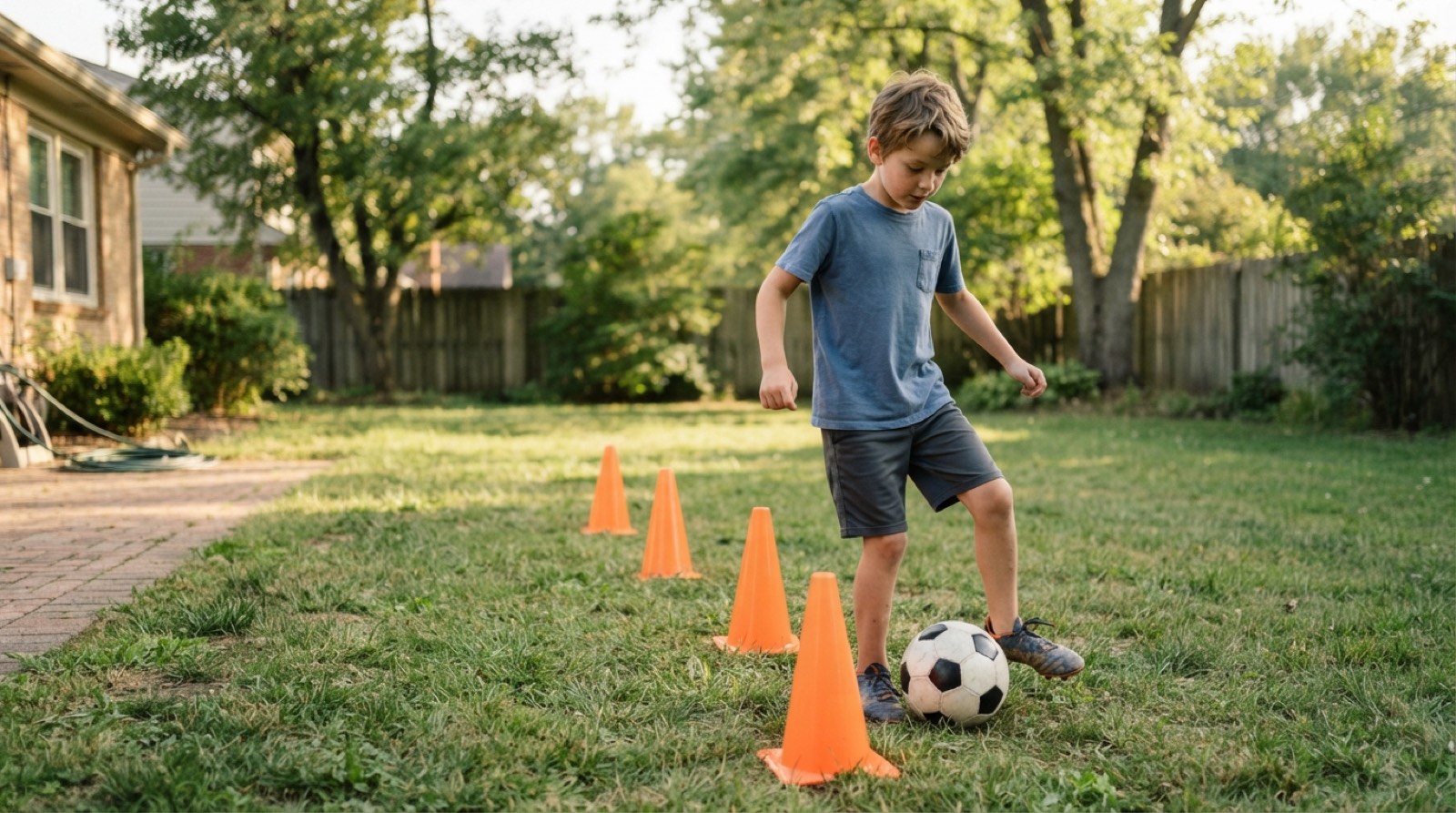
Parents ask me all the time what their child can do between practices. My answer is usually simpler than they expect: put a ball at their feet and give them a game they can win.
You do not need a big yard in Temecula. You do not need expensive equipment. Five simple soccer drills for kids at home can build more confidence than a long lecture from the sideline.
Key takeaways
- Keep home training short, simple, and fun.
- Ball control matters more than speed at first.
- A wall can be one of the best passing partners.
- Use safe markers instead of buying special gear right away.
- If your child wants more, pair home touches with soccer training.
What soccer drills can kids practice at home?
Kids can practice toe taps, inside-outside touches, cone dribbling, wall passing, and a small finishing game at home. These drills build balance, ball control, passing, and confidence without needing a full field. Start slowly, keep the space safe, and stop before the work feels like a chore.
The best home practice looks more like play than homework. A child who enjoys the ball will come back to it.
If your child is brand new, pick one drill and repeat it for a few days. Repetition is not boring when the child can feel progress. A cleaner touch, a smoother turn, or a pass that comes back straight from the wall is real learning.
Drill 1: toe taps for balance and rhythm
Toe taps teach a child to stay light on their feet while keeping the ball close. Set the ball still, have your child tap the top with one foot, then switch feet. The first goal is control, not speed, because sloppy fast touches do not help.
Try this:
| Level | Goal |
|---|---|
| Beginner | Slow taps without the ball rolling away |
| Growing player | Smooth left-right rhythm |
| Advanced | Head up while tapping |
The CDC says children ages 6-17 need 60 minutes or more of daily activity, and this is an easy way to add movement before dinner or after homework.
Drill 2: inside-outside touches
Inside-outside touches help a child learn the two surfaces they use constantly in games. Tap the ball across the body with the inside of the foot, then push it back with the outside of the same foot. Switch feet after a short round.
I like this drill because it builds control in tight spaces. In games, young players rarely get a perfect open lane. They need little touches that help them turn away from pressure.
Make it easier by walking. Make it harder by adding a turn at the end.
Drill 3: cone dribble with safe markers
A short dribble course teaches kids to steer the ball, not chase it. Place a few soft markers in a line and ask your child to weave through them. If you do not have cones, use shoes, flat discs, or chalk marks.
U.S. Soccer’s small-sided game standards are built around age-appropriate spaces, with young players in smaller formats such as 4v4 for U6-U8. Home practice should follow that same idea: small space, lots of touches, no long lectures.
Start with this pattern:
| Round | Cue |
|---|---|
| 1 | Keep the ball close |
| 2 | Use both feet |
| 3 | Look up between touches |
| 4 | Turn and come back |
If your child keeps losing the ball, widen the markers. Success first, challenge second.
Drill 4: wall passing
A wall gives instant feedback, which makes it a strong passing partner for home practice. If the pass is too soft, it dies. If the pass is crooked, the return is awkward. That is good learning, and it does not require another player.
Use a safe wall or rebounder and ask your child to pass with the inside of the foot. The first goal is a clean pass and clean first touch. Later, add left foot, two-touch passing, or a small target on the wall.
For younger players, keep the ball on the ground. Power can come later. Clean contact comes first.
Drill 5: the gate game
The gate game turns dribbling into a challenge kids can understand quickly. Make small gates with two markers. Your child scores by dribbling through a gate under control. Add more gates if you have room, and let them beat their own score.
This works because it feels like a game. A child can count points, beat a previous score, or race a parent. I have seen shy players in Temecula gain confidence from small wins like this, then carry that confidence into practice.
| Space | Setup |
|---|---|
| Driveway | Chalk gates |
| Backyard | Shoes or cones |
| Hallway | Soft ball only |
| Park | Wider gates and turns |
Keep the ball safe for the space. Indoors means a soft ball and family permission.
How often should kids practice at home?
For most children, a few short sessions a week beat one long grind. The American Academy of Pediatrics says most children have basic motor skills for simple organized sports by age 6, but younger kids still learn best through play, copying, and short instruction.
That is exactly how home practice should feel. A short, happy session is better than a long session that ends in frustration. If your child asks to keep going, great. If they are done, let the ball wait for tomorrow.
If your child is just starting, read What Age Should Kids Start Soccer?. If you are shopping for the right ball and cleats, use the Youth Soccer Gear Checklist.
What parents should say during drills
Say less and watch more, because young players need room to solve the ball with their body. A stream of corrections can turn a fun drill into pressure. Use one short cue, then let your child try again with confidence.
Use short cues:
- “Softer touch.”
- “Try the other foot.”
- “Head up.”
- “Can you beat your score?”
Avoid turning every mistake into a lesson. The child already knows when the ball rolls away. Your job is to keep the mood light enough that they try again.
When home drills are not enough
Home drills build comfort, but they do not replace game decisions. A player also needs teammates, pressure, spacing, and coaching. That is where a team or structured training helps, especially once a child can perform a skill alone but not yet in traffic.
I watch for one simple sign: does the child use a skill in a game without being told? When a player can dribble through a gate at home, then protect the ball from a teammate at practice, the drill has done its job. The next step is not more complicated drills. It is more game-like practice.
If your child is asking for more, compare the next step. A beginner may need a team. A committed player may need training. A player who wants a bigger challenge may be ready to read about competitive soccer.
Families in Temecula, Murrieta, Menifee, Lake Elsinore, and Wildomar can also use a free evaluation to see which path fits without guessing.
The main thing is consistency. A ball in the driveway three evenings a week will teach more than a perfect plan that never happens. Keep it simple enough that your child can start without you setting up a full practice.
Simple wins are what keep kids returning.
Frequently asked questions
What are the best soccer drills for kids at home?
The best home drills are simple: toe taps, inside-outside touches, wall passing, cone dribbling, and a small finishing game. They build comfort on the ball without needing a full field. Keep the session short, fun, and matched to your child's age.
How long should kids practice soccer at home?
For most kids, a short focused session is enough at home. Stop while they still want more. The CDC recommends [60 minutes of daily activity for school-age children](https://www.cdc.gov/physical-activity-education/guidelines/index.html), but that can include recess, biking, play, and team practice, not only soccer drills.
Do kids need cones for home soccer drills?
No. Cones help, but shoes, water bottles, chalk marks, or flat markers can work. The important part is a safe space and a clear target. Avoid hard objects that can trip a child or damage a ball, especially on driveways.
Can beginners do soccer drills at home?
Yes. Beginners often improve fastest with simple touches at home because there is no pressure. Start with slow toe taps, short dribbles, and gentle wall passes. If your child gets frustrated, make the drill easier or turn it into a game.
When should my child get formal soccer training?
Consider formal training when your child enjoys practicing, wants more challenge, or needs help with a specific skill. Home drills are a good start, but a coach can fix habits, teach decision-making, and match the work to your child's level.