
Youth Soccer Guide
What Size Soccer Ball Does My Child Need? A By-Age Chart
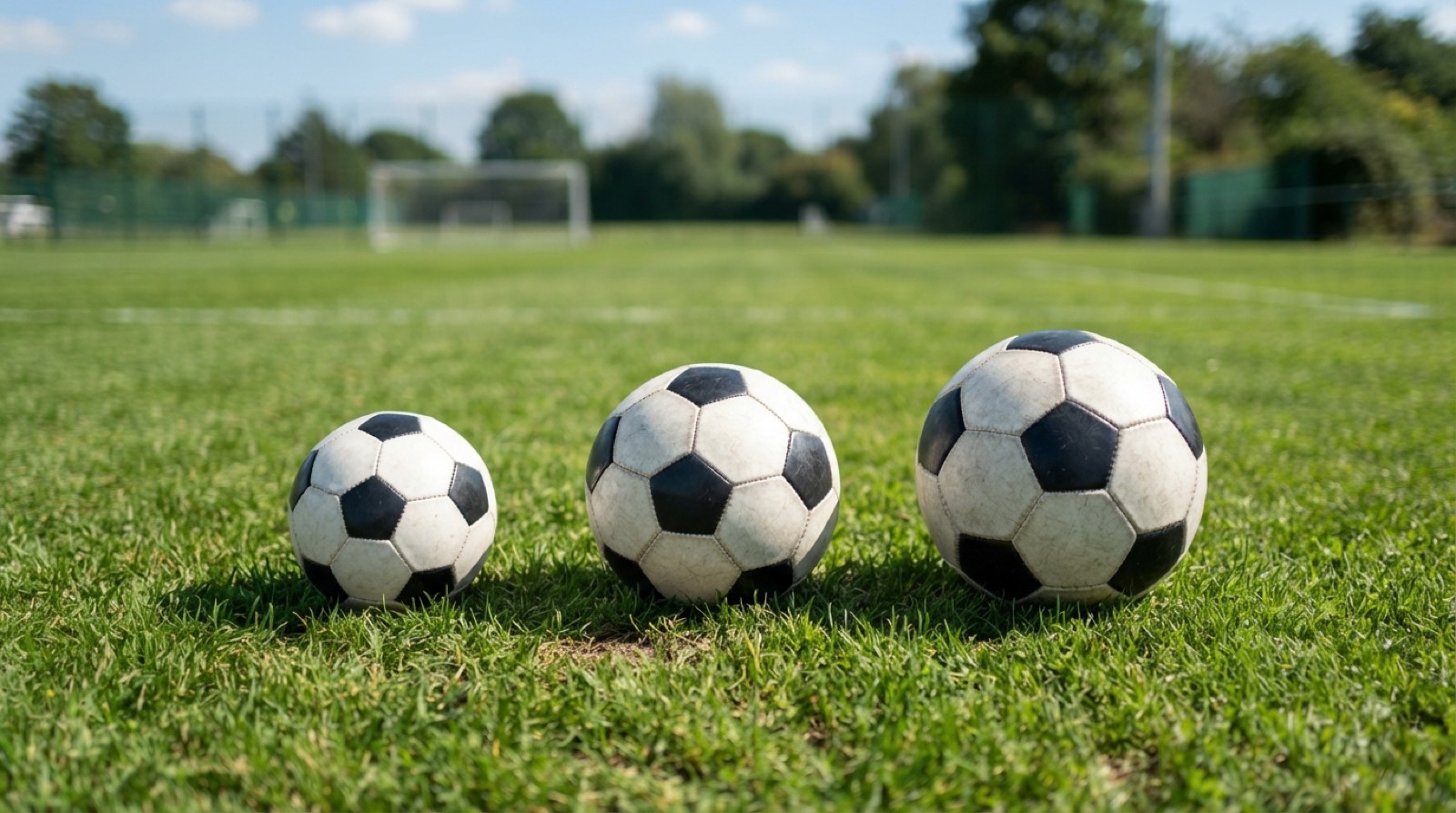
Parents overthink cleats and underthink the ball. Then a child shows up to practice with a full-size ball that feels like a rock, and every touch becomes harder than it needs to be.
The fix is simple. Match the ball to the child’s age group. U.S. Soccer already built the ladder, and it works because small players need a smaller, lighter ball to learn clean technique.
Key takeaways
- U.S. Soccer’s Player Development Initiatives use size 3 for U6-U8, size 4 for U9-U12, and size 5 for U13 and older.
- Younger players should not rush into a full-size ball.
- The right ball helps with first touch, confidence, and fun.
- Buy the correct size before you buy the expensive model.
- For Temecula practices, label the ball and bring water with it.
What size soccer ball does my child need?
Your child needs the ball size tied to their age group: size 3 for U6-U8, size 4 for U9-U12, and size 5 for U13 and older. That is the U.S. Soccer small-sided game standard. If a coach gives a season-specific instruction, follow the coach for that team.
Here is the simple chart I give parents:
| Age group | Common ages | Ball size | Game format |
|---|---|---|---|
| U6-U8 | 5-8 | Size 3 | 4v4 |
| U9-U10 | 8-10 | Size 4 | 7v7 |
| U11-U12 | 10-12 | Size 4 | 9v9 |
| U13 and older | 12+ | Size 5 | 11v11 |
Source: U.S. Soccer Player Development Initiatives.
Why ball size matters
Ball size matters because technique is learned through clean, repeated touches. A ball that is too big or too heavy changes how a child kicks, receives, and turns. Young players need confidence with the ball first. Power can come later, when the body is ready.
In my 25 years coaching in Temecula, I have seen small players look uncoordinated simply because the equipment was wrong. Give that same child the right size ball, and suddenly the touch improves. The player did not change. The tool finally fit.
U.S. Soccer’s small-sided model pairs ball size with game format: 4v4 for U6-U8, 7v7 for U9-U10, 9v9 for U11-U12, and 11v11 for U13 and older. The whole idea is age-appropriate development.
Size 3 soccer balls: U6 to U8
Size 3 is the right ball for most U6-U8 players because it is easier to move, stop, and strike. At this age, the goal is touches and joy, not power. A smaller ball lets children dribble without fighting the equipment every step.
The U.S. Soccer Player Development Initiatives pair U6-U8 players with 4v4 games and a size 3 ball. That setup keeps the field small and the ball near each child.
If your child is in kindergarten or early elementary school, do not buy a size 5 “to grow into.” They will grow into it later. Right now, they need a ball they can control. For the bigger starting-age question, read What Age Should Kids Start Soccer?.
Size 4 soccer balls: U9 to U12
Size 4 is the main youth soccer ball for U9-U12 players. It gives more weight and distance than size 3 without forcing pre-teens to use the full adult ball. This is the stage where passing, receiving, and shooting mechanics start to look more like real soccer.
U.S. Soccer uses a size 4 ball for both 7v7 at U9-U10 and 9v9 at U11-U12 in the Player Development Initiatives. That means many players use size 4 for several seasons.
This is the age when backyard touches matter. A ball by the door beats an expensive training plan a child never uses. If your player wants extra work, simple wall passes and dribbling in a safe space are enough. For guided help, training can add structure without making the game feel heavy.
Size 5 soccer balls: U13 and older
Size 5 is the full-size soccer ball, usually used at U13 and older. It matches the 11v11 game and prepares players for older youth, high school, and adult soccer. Younger children can kick it around for fun, but it should not be their main training ball too early.
The same U.S. Soccer standards move players to 11v11 at U13 and older, with a size 5 ball. By then, most players have the strength and coordination to handle the bigger ball without changing their technique.
If your child is moving into competitive soccer around this age, the ball is only one part of the jump. The schedule, coaching, and expectations matter too. Rec vs. Competitive Youth Soccer gives the full parent comparison, and competitive soccer explains that path locally.
How to buy a good youth soccer ball
Buy the correct size first, then choose a ball with decent stitching, a surface your child likes, and a price that does not make you nervous when it gets scuffed. For most kids, a mid-range training ball is enough. Save match-ball spending for later.
My simple buying checklist:
| Feature | What to choose |
|---|---|
| Size | Match the age chart above |
| Feel | Firm, not painful |
| Use | Training ball for daily touches |
| Color | Easy to spot on grass |
| Label | Child’s name and phone number |
Do not buy a heavy, hard ball for a young player because it looks official. A child who avoids kicking the ball will not improve. A ball they like, carry, and use every day is the better buy.
One more practical point: check the air before practice. A flat ball teaches sloppy touches, and an overfilled ball can feel harsh on a young foot. You do not need a gauge for every backyard session. Just keep it firm enough to roll true and soft enough that your child wants to strike it.
What to bring to the first practice
For the first practice, bring the right ball, cleats, shin guards, soccer socks, water, and a simple bag. That is enough for most youth soccer sessions. Coaches would rather see a child arrive comfortable, hydrated, and ready than overloaded with extra gear.
Use this first-practice list:
- Correct-size soccer ball
- Shin guards under soccer socks
- Cleats or approved athletic shoes
- Water bottle
- Light snack for after practice
- Sunscreen for daytime sessions
- Name label on the ball and bottle
For a fuller list, read Youth Soccer Gear Checklist. If your child is joining in late summer or fall, also read Keeping Kids Safe in the Heat before the first warm practice.
Local advice for Temecula families
For families in Temecula, Murrieta, Menifee, Lake Elsinore, and Wildomar, the smartest move is to buy one correct-size ball and get your child using it often. A few relaxed minutes in the yard can do more than a fancy ball sitting unused in a garage.
If you are not sure which program fits your child, start with a free evaluation. A coach can confirm the age group, the level, and the equipment your child should bring. Keep the gear simple. Let the game do the work.
Frequently asked questions
What size soccer ball does my child need?
Use the U.S. Soccer age ladder: [size 3 for U6-U8, size 4 for U9-U12, and size 5 for U13 and older](https://www.usyouthsoccer.org/wp-content/uploads/sites/160/2023/09/Player-Development-Initiatives-2017.pdf). If your club gives a different instruction, follow the club for that season so your child practices with the ball used in games, team training, and home sessions with teammates. That keeps practice simple.
What size soccer ball for a 5 year old?
Most 5-year-olds use a size 3 soccer ball. U.S. Soccer's [Player Development Initiatives](https://www.usyouthsoccer.org/wp-content/uploads/sites/160/2023/09/Player-Development-Initiatives-2017.pdf) place U6-U8 players with a size 3 ball, which is lighter and easier for younger children to control. Pick comfort, confidence, and touches over buying a bigger ball early.
What size soccer ball for a 9 year old?
Most 9-year-olds use a size 4 soccer ball. U.S. Soccer's [small-sided game standards](https://www.usyouthsoccer.org/wp-content/uploads/sites/160/2023/09/Player-Development-Initiatives-2017.pdf) move U9-U12 players to size 4, matching the 7v7 and 9v9 formats. It is the main youth size before the full-size ball, so most families use it for several seasons.
When do kids use a full-size soccer ball?
Players usually move to a full-size 5 ball at U13 and older, based on U.S. Soccer's [Player Development Initiatives](https://www.usyouthsoccer.org/wp-content/uploads/sites/160/2023/09/Player-Development-Initiatives-2017.pdf). That lines up with the full 11v11 game. Younger players should not rush it, because an oversized ball can make technique harder and reduce good touches.
Should I buy an expensive soccer ball for my child?
No, not at first. Buy the correct size, decent stitching, and a ball your child likes enough to use. Young players improve by touching the ball often. A fancy match ball does not help much if it stays in the garage or feels too hard to kick.