
Youth Soccer Guide
Toddler and Preschool Soccer: Is Your 3-5 Year Old Ready?
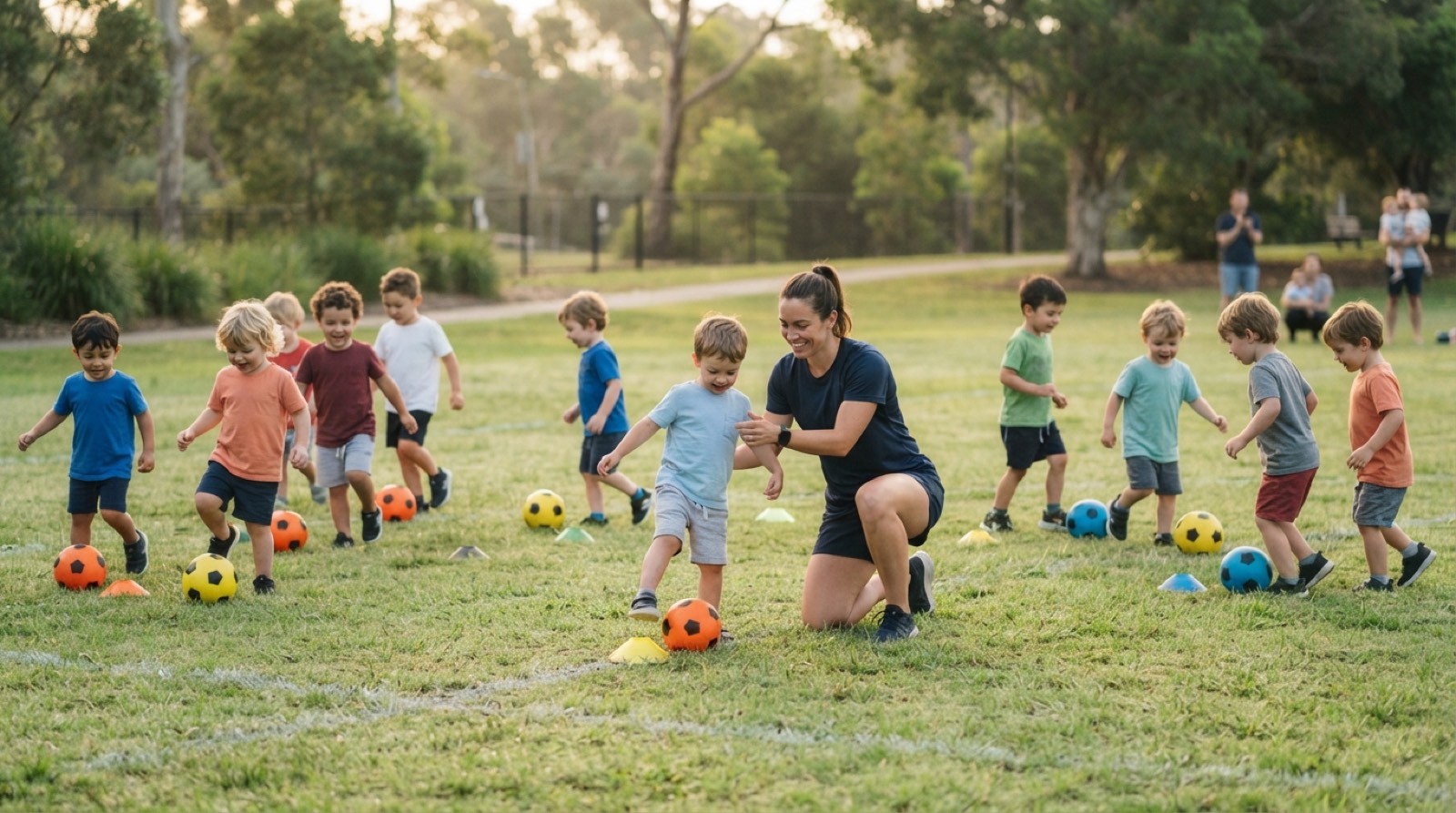
A Temecula parent will sometimes point to a 3-year-old kicking a ball in the yard and ask, “Is it time for soccer?”
Maybe. But toddler soccer and preschool soccer should not look like older-kid soccer. At ages 3-5, the goal is not positions, tactics, or winning. The goal is movement, confidence, listening, and joy with a ball.
Key takeaways
- Ages 3-5 need active play more than organized competition.
- Most children are ready for true team soccer around age 6.
- Preschool soccer should be short, playful, and full of ball touches.
- Avoid pressure, long lines, and adult expectations that are too big.
- A size 3 ball, water, and safe shoes are usually enough to start.
Is your 3-5 year old ready for toddler soccer?
Your 3-5 year old is ready for toddler soccer if the program is playful, short, and built around movement rather than competition. Most children this age are not ready for real team soccer. They can still benefit from kicking, chasing, balancing, and simple ball games that make them want to play again.
That difference matters. A child can be ready for soccer play before they are ready for soccer practice.
What pediatricians say about ages 3-5
The American Academy of Pediatrics gives parents a helpful guardrail. HealthyChildren.org says before age 6 most children do not have the basic motor skills, balance, attention span, vision, or tracking ability for organized sports. It also says children at this age learn best through exploration, copying, and play, and that competition should be avoided.
That is exactly what I see on the field. A 4-year-old may love the ball one minute and chase a butterfly the next. That is not bad behavior. That is the age. The coach’s job is to design a session that fits the child, not force the child to act older.
Active play is the real goal
Active play is the real goal because preschool children need movement across the day, not formal training pressure. The U.S. Department of Health and Human Services says children ages 3-5 should be active throughout the day and adults should aim for at least 3 hours per day.
For a young child, a good soccer session builds running, stopping, kicking, balance, and confidence. It should feel like guided play. If your child leaves tired and happy, that is a win. If they leave stressed, embarrassed, or bored in lines, the session missed the point.
What a good preschool soccer session looks like
A good preschool soccer session is simple, active, and built for short attention spans. Kids should touch the ball often, move in short bursts, hear short instructions, and switch activities before attention disappears. Parent help can be useful for young or nervous children.
| Good for ages 3-5 | Too much for ages 3-5 |
|---|---|
| Short games | Long drills |
| One instruction at a time | Tactical talks |
| Small groups | Crowded lines |
| Parent support if needed | Forced independence on day one |
| No score pressure | Win/loss focus |
| Lots of ball touches | Waiting turns for minutes |
I like games such as red light-green light with a ball, dribble to a color, chase the coach, or knock over cones. Those games teach soccer skills without making a preschooler feel like they are in school again.
Signs your child is ready
Readiness at this age is not about talent. It is about interest, comfort, and attention. A child who wants the ball and can follow one simple instruction is ready for some kind of soccer play. A child who cries every week or refuses to enter the space may need more time.
Look for:
- They ask to kick or chase a ball.
- They can separate from a parent for short moments, or try with parent help.
- They can follow one simple direction.
- They can share space with other children.
- They recover after small frustrations.
If your child has only two or three of those, start casually at home. The field will still be there later.
What to avoid with toddler soccer
The fastest way to turn a young child off is to make soccer too serious too soon. I have seen parents correct every touch from the sideline, compare children too early, or worry that a preschooler is “behind.” That pressure helps nobody and can make the ball feel like work.
Avoid:
- Tryout-style sessions for preschoolers.
- Long lines where kids wait more than play.
- Coaches who shame mistakes.
- Adult tactics for children who are still learning to stop and start.
- Year-round pressure at ages 3-5.
The American Academy of Pediatrics warns that early specialization, intensive training, and year-round training should be approached with caution because of overuse injury, mental stress, and burnout. For preschoolers, that warning should be easy to follow: keep it light.
What ball and gear should you use?
Start with the basics because preschool soccer gear should make play easier, not harder. A young child needs comfortable clothes, water, safe shoes, and a small ball. Many preschoolers do fine in athletic shoes before they need cleats. If the program involves contact play, shin guards may be required.
U.S. Soccer’s small-sided standards use size 3 balls for U6-U8 players, and that is the right size for most preschool play too. A full-size ball is too big and changes the way a small child kicks.
For a full buying guide, read the Youth Soccer Gear Checklist.
When to move from play to team soccer
Most children are ready to move from play to simple organized soccer around age 6. The AAP says by age 6 most children have the basic motor skills for simple organized sports, though they may still need flexible rules and age-appropriate equipment.
That is when small-sided soccer starts to make more sense. U.S. Soccer uses 4v4 for U6-U8, then 7v7 for U9-U10, 9v9 for U11-U12, and full 11v11 at U13 and older in its Player Development Initiatives. The field grows as the child grows.
If your child is close to that stage, read What Age Should Kids Start Soccer?.
How parents can help at home
The best preschool soccer training is often in the yard, driveway, or park because young children learn through play. Keep it short and silly. Let your child make up rules. Celebrate effort. Stop while they still want more, so the ball stays connected with fun.
Try:
- Kick the ball to a cone.
- Dribble to a color.
- Chase the parent.
- Stop the ball with the bottom of the foot.
- Knock down a soft target.
- Make a goal with two shoes.
Do not correct every mistake. At this age, the child is building a relationship with movement. The ball is a toy first. Skills come later.
Starting preschool soccer in Temecula
Temecula, Murrieta, Menifee, Wildomar, and Lake Elsinore families have plenty of youth options, but the right first step for a 3-5 year old is usually the simplest one: playful movement and a coach who understands the age. Start smaller than you think.
If your child is 4 or 5 and ready for a gentle first look, start with a free evaluation or ask about age-appropriate training. If you need a regular after-school activity as they grow, after-school soccer can fit some family schedules. The main rule stays the same: keep the first soccer experience happy enough that your child asks to play again.
Frequently asked questions
Can a 3 year old play soccer?
A 3 year old can play with a soccer ball, but usually is not ready for true team soccer. Keep it playful: dribbling, chasing, kicking, and simple games with short instructions. At this age, success means the child moves, smiles, and wants to come back.
Is preschool soccer worth it?
Yes, if it is play-based and low pressure. Preschool soccer should build movement, confidence, listening, and comfort around a ball. It should not feel like a miniature competitive team. For ages 3-5, the goal is active play and joy, not tactics.
What should toddler soccer practice look like?
It should be short, active, and simple. Good sessions use small balls, playful challenges, parent help when needed, frequent changes, and no long lines. Children should touch the ball often and hear clear, kind instructions. Games should beat drills at this age.
When is a child ready for organized soccer?
Most children are ready for simple organized soccer around age 6, when they can follow directions, take turns, and understand basic teamwork. Some 5 year olds are close; many 3 and 4 year olds are not. Interest and attention matter more than the birthday.
What gear does a preschool soccer player need?
Keep gear simple: comfortable clothes, water, safe shoes, and shin guards if the program requires contact play. A size 3 ball is usually right for young players. Do not buy expensive cleats or extras until your child is attending regularly and enjoying it.