
Youth Soccer Guide
Building Confidence Through Soccer: Help for Shy Kids
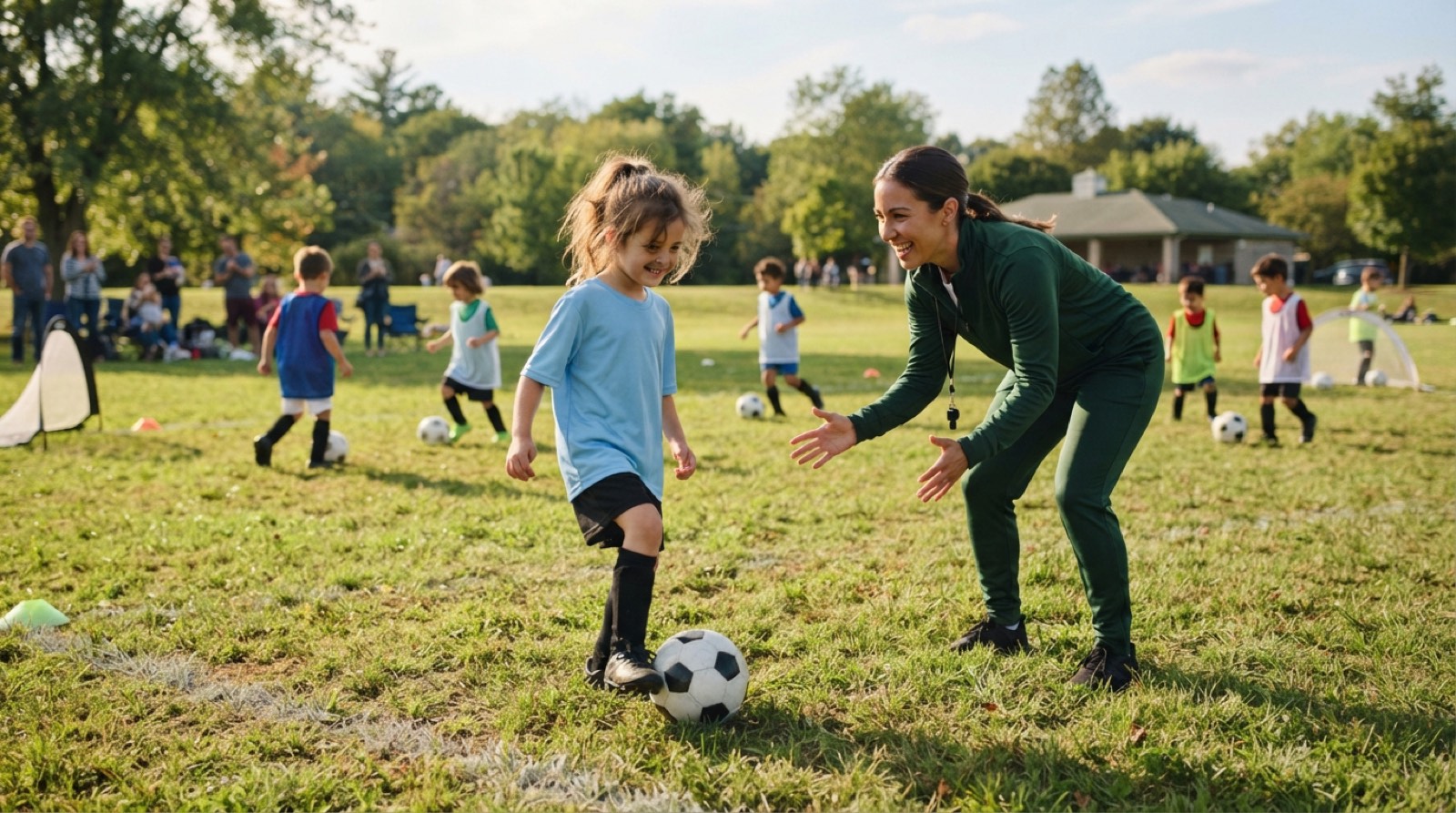
Some children run into practice like they own the field. Others stay close to a parent, avoid eye contact, and hope no one notices them. I have coached both kinds of kids in Temecula, and I can tell you this: quiet does not mean weak.
Soccer can help shy kids build confidence because the game offers small social steps inside a shared activity. No speeches, no spotlight, no forced performance. Just a ball, teammates, and a coach who knows when to invite a child in without pushing too hard.
Key takeaways
- Shy kids build confidence best through small, repeatable wins.
- Team sports can support social and emotional health, but the coach matters.
- Parents should praise courage and effort, not goals or trophies.
- The first goal is belonging; skill comes faster once a child feels safe.
- A gentle soccer setting can be a good bridge toward competitive soccer later.
Can soccer help shy kids build confidence?
Yes. Soccer helps shy kids because it gives them a role before it demands a voice. A child can pass, defend, run, and help a teammate without being the loudest person there. Over time, those small contributions become proof: “I belong here, and my team needs me.”
That matters because confidence is not something we can lecture into a child. They have to experience it. In a good practice, a shy player might start by standing near the group. Then they join warm-up. Then they call a teammate’s name. Then they ask for the ball. None of that looks dramatic, but it is real growth.
Research supports the value of that team environment. A PLOS ONE study of 11,235 U.S. children found that kids who played team sports had lower withdrawn-depressed, social-problem, thought-problem, attention-problem, and anxious-depressed scores than kids who did not play sports. That is an association, not proof that soccer alone causes the change. But it matches what I have seen on the field for years: kids grow when they feel part of something.
Why shy kids often do well in soccer
Soccer fits shy children because it is active, shared, and forgiving. A child does not have to stand at home plate with everyone staring. They can move with the group, touch the ball, and learn through repetition. The game gives them many chances without making every mistake feel like a public event.
That is why I often prefer soccer for a quiet child over activities that isolate them too early. The team gives cover. The ball gives purpose. The rules give structure. A shy child who struggles to start a conversation can still make a pass and hear a teammate say, “Good ball.”
Those tiny moments matter. I have seen a child spend the first practice barely speaking, then spend the season slowly becoming the player who points, calls, and organizes. Not because we demanded leadership, but because the field gave them safe reasons to practice it.
If your child is brand new to organized sport, read What Age Should Kids Start Soccer? before you choose a program. Readiness matters more than age on paper.
What kind of coaching builds confidence?
Confidence grows when a coach creates clear expectations, corrects with respect, and notices effort before outcome. Shy kids do not need a coach who ignores them, and they do not need a coach who turns every mistake into a lesson for the whole group. They need steady attention without embarrassment.
I look for three things with a shy player:
| Coaching move | Why it helps a shy child |
|---|---|
| Greet the child by name | It shows they are seen without being put on display |
| Give one simple job | It lowers confusion and gives them a way to help |
| Praise brave actions | It rewards participation, not personality |
| Pair with a kind teammate | It makes the group feel smaller and safer |
The adult on the field matters more than most parents realize. Aspen Project Play reports that with trained coaches, only 5% of kids did not return the next season, compared with 26% of kids coached by untrained adults. That is not just a coaching stat. It is a child-comfort stat.
This is also why I tell parents to judge a club by the training and temperament of the coaches, not by how loud the sideline gets. A quiet kid can blossom with the right adult and shut down with the wrong one.
How parents can help from the sideline
Parents build confidence by making soccer feel safe after the game, not by coaching every touch during it. A shy child is already managing a lot: noise, teammates, instructions, and the fear of messing up. Too much parent feedback can turn the car ride home into another performance review.
Use simple praise tied to courage:
- “I saw you join the warm-up even though you were nervous.”
- “I liked how you tried again after missing.”
- “You called for the ball today. That was brave.”
Avoid comparisons. Avoid “Why didn’t you shoot?” Avoid naming the best player on the team as the standard. Shy children often read disappointment quickly, even when parents mean well.
If you are deciding between a lighter and more serious program, Recreational vs. Competitive Youth Soccer explains the difference. For shy kids, the right level is the one where they can participate often enough to grow.
What progress usually looks like
Progress with a shy player is usually quiet before it is obvious. The first sign may not be a goal. It may be walking to the team without holding your hand, answering the coach, or staying in the game after a mistake. That is confidence being built in real time.
I like this simple ladder:
| Stage | What parents may see |
|---|---|
| Safety | Child watches, stays close, learns names |
| Participation | Child joins warm-ups and simple games |
| Voice | Child calls for a pass or answers the coach |
| Risk | Child tries a move, shot, or new position |
| Ownership | Child packs gear, asks to practice, wants more |
Do not rush the ladder. A child may move up and down depending on sleep, school stress, or the opponent. That does not mean the program failed. It means they are human.
The CDC recommends 60 minutes or more of daily activity for children and adolescents, and soccer is one healthy way to get that movement while also practicing social confidence. The best version gives both: active bodies and braver kids.
When to push and when to pause
Push gently when your child is nervous but recovers once practice starts. Pause when the anxiety stays high, the coach is harsh, or your child repeatedly leaves the field feeling smaller than when they arrived. Confidence training should stretch a child, not flatten them.
I tell parents to watch the after-effect. A shy child may complain before practice and still come home proud. That is normal. But if they dread every session, stop sleeping well, or seem ashamed after mistakes, something needs changing.
Sometimes the fix is simple: a different group, a smaller session, or a talk with the coach. Sometimes the child needs more unstructured play before joining a team. If your child is active but not ready for a team, simple backyard passing works; if they want more structure, training can help without forcing a full team commitment.
Finding the right fit in Temecula
For families in Temecula, Murrieta, Menifee, Lake Elsinore, and Wildomar, the right soccer setting for a shy child is one where the coach knows the child by name and the first weeks are not treated like a test. Confidence grows best where kids feel noticed, not judged.
If your child is ready to try, keep the first step low-pressure. Ask about coach training, group size, and whether your child can start with a free evaluation through a free evaluation. The goal is not to make a shy child loud. The goal is to help them feel capable, connected, and brave enough to keep playing.
Frequently asked questions
Can soccer help a shy child build confidence?
Yes, when the environment is patient and low-pressure. Soccer gives shy kids small, repeatable moments to speak, try, fail, and belong. A good coach does not force a personality change. The goal is steady comfort: greeting teammates, asking for the ball, and learning they can contribute.
Should I tell the coach my child is shy?
Yes. A short note helps the coach start wisely. Tell them what your child handles well, what makes them freeze, and whether they prefer a quiet first session. Good coaches use that information to create early wins without making the child feel singled out.
What if my child cries before practice?
Do not turn one hard drop-off into a verdict. Keep your goodbye calm, brief, and predictable. Ask the coach for a gentle entry point, like warming up with one teammate. If the crying continues for weeks or your child seems distressed all day, pause and reassess the fit.
Is competitive soccer good for shy kids?
Sometimes, but only after the child has basic comfort and genuine interest. Competitive soccer adds pace, pressure, and feedback. Some shy kids grow with that challenge; others need a slower path first. Start with the environment that lets them participate, then move up when they ask for more.
How can parents help without adding pressure?
Praise brave actions, not performance. Say, "I saw you ask for the ball," or "I saw you try again after missing." Avoid sideline coaching, comparisons, and post-game lectures. Shy kids usually need safety first; confidence grows after they feel accepted.