
Youth Soccer Guide
After-School Soccer and Sports Care: A Parent's Guide
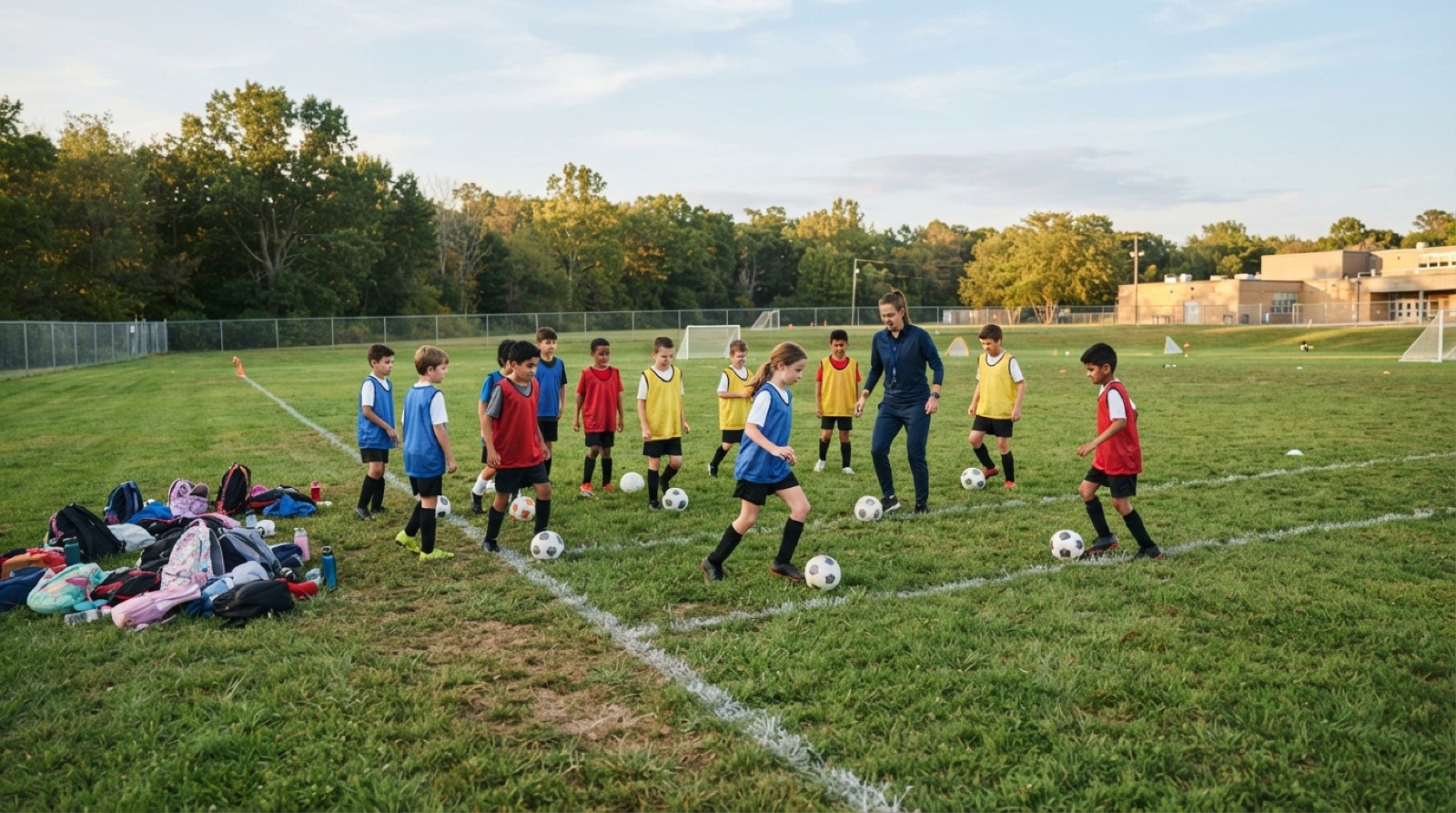
After school is the hardest part of the day for many families. Kids are tired from sitting, parents are still working, and the easy default is a screen until pickup.
That is why I like a good after-school soccer program. Done right, it gives children movement, supervision, friendship, and a reset before homework. It should feel active and safe, not like another pressure-filled practice.
Key takeaways
- Kids need 60 minutes of activity a day, and most do not get it.
- After-school soccer can turn care hours into healthy movement.
- Safety, supervision, pickup, shade, and coaching quality matter most.
- Beginners should feel welcome, not tested.
What is an after-school soccer program?
An after-school soccer program is supervised care built around active play, ball work, and simple games after the school day. The CDC reports fewer than 1 in 4 children get the recommended daily activity, so this format solves a real family problem.
The best programs do not try to turn every child into a travel player. They give kids a safe place to move, learn, and burn off school-day energy. For some children, it becomes their first positive step into soccer.
If your child is already asking for more formal soccer, compare this option with recreational vs. competitive youth soccer. The right choice depends on age, confidence, and family schedule.
Why after-school movement matters
After-school movement matters because children ages 6–17 need 60 minutes or more of daily activity, according to the CDC physical activity guidelines. A soccer-based program can cover much of that need before dinner, when many families run out of time.
Soccer works well here because it is flexible. A coach can run low-pressure games for new players, skill stations for experienced players, and short breaks when the weather is hot. Nobody needs a long lecture after a full school day.
| After-school need | Soccer-care answer |
|---|---|
| Safe supervision | Staffed pickup and activity window |
| Daily movement | Running, dribbling, passing, games |
| Social time | Small teams and shared goals |
| Confidence | Repeated touches without tryout pressure |
For kids who are shy or new, an active setting can be easier than walking cold into a team. I see that a lot with families from Temecula, Murrieta, and French Valley.
What to check before signing up
Start with safety and staff. U.S. Soccer says its coaching pathway requires SafeSport training and background checks at every license level (U.S. Soccer Learning Center). Even if a program is not a competitive team, parents should still expect clear answers about adult supervision.
Ask who is with the children, how pickup is verified, where water and shade are, and what happens if a child gets hurt. Also ask whether the program separates players by age or ability when needed. A six-year-old beginner and a twelve-year-old club player should not be treated the same.
In my 25 years coaching in Temecula, the best parent question is simple: “What happens on a normal Tuesday?” The answer tells you more than a glossy promise.
Is after-school soccer right for beginners?
Yes, if the program is built around fun and age-appropriate play. The American Academy of Pediatrics says most children are ready for organized team sports around age 6, while younger children need free play more than formal competition, lines, or pressure.
That means a beginner should not be corrected every five seconds. They should get touches, encouragement, and simple games that make them want to come back. A good coach notices the child who hangs back and gives them a small win early.
If you are unsure whether your child is ready, read What Age Should Kids Start Soccer?. It explains the difference between play readiness and team readiness.
After-school soccer versus a club team
After-school soccer and team soccer solve different problems. The Aspen Institute reported 27.3 million youth ages 6–17 played organized sport in 2024, but not every family needs another weekend team. Some need weekday care with real activity and trusted adults.
| Option | Best for | Watch out for |
|---|---|---|
| After-school soccer | Care, movement, beginner confidence | Weak supervision or no heat plan |
| Recreational team | Seasons, friends, local games | Schedule may not solve after-school gap |
| Competitive team | Driven players wanting more | Travel, cost, and overload |
If your child starts loving the game through after-school soccer, a next step may be training, a local team, or eventually competitive soccer. There is no need to rush that ladder.
What Temecula families should look for locally
Look for a program that fits the real school week. The CDC says fewer than 1 in 4 kids get enough activity, and the after-school window is one of the easiest places to fix that without stealing family dinner or homework time.
For families in Temecula, Murrieta, Menifee, Lake Elsinore, Wildomar, and Winchester, convenience matters. So does trust. SWSC’s after-school soccer care program is built for that gap: safe care, active play, and a soccer environment that can grow with the child.
If you want help deciding whether care, training, or a team is the right first step, start with a free evaluation. Keep it simple: match the program to the child you have today.
Frequently asked questions
What is an after-school soccer program?
An after-school soccer program combines care, supervision, and soccer-based movement after school. The [CDC](https://www.cdc.gov/physical-activity-education/guidelines/index.html) recommends 60 minutes of daily activity, and [CDC school-health data](https://archive.cdc.gov/www_cdc_gov/healthyschools/physicalactivity/facts.htm) says fewer than 1 in 4 kids meet it.
Is after-school soccer good for beginners?
Yes. Beginners often do well because after-school soccer can feel less formal than a team tryout. The [American Academy of Pediatrics](https://www.healthychildren.org/English/healthy-living/sports/Pages/Is-Your-Child-Ready-for-Sports.aspx) says most kids are ready for organized team sports around age 6, while younger children still benefit from simple active play.
What should parents ask before choosing a program?
Ask who supervises the children, whether staff are background-checked, how pickup works, and how the program handles heat or injuries. [U.S. Soccer](https://learning.ussoccer.com/coach) requires SafeSport and background checks through its coaching pathway, so clear safety answers matter as much as soccer drills.
Can after-school soccer replace team practice?
Usually no. It can build touches, fitness, and confidence, but it is not always the same as team training. The [CDC](https://www.cdc.gov/physical-activity-education/guidelines/index.html) recommends 60 minutes of daily activity; after-school soccer helps while team programs provide matches, roles, and season structure.